
Problem FRAMING
Problem framing involves identifying the problem, understanding context, defining target audience, and developing hypotheses for desired outcomes.
Essential Resources
Books:

Think Like a UX Researcher by David Travis & Philip Hodgson – Explains how to define user problems with clarity and use research to frame actionable product insights.
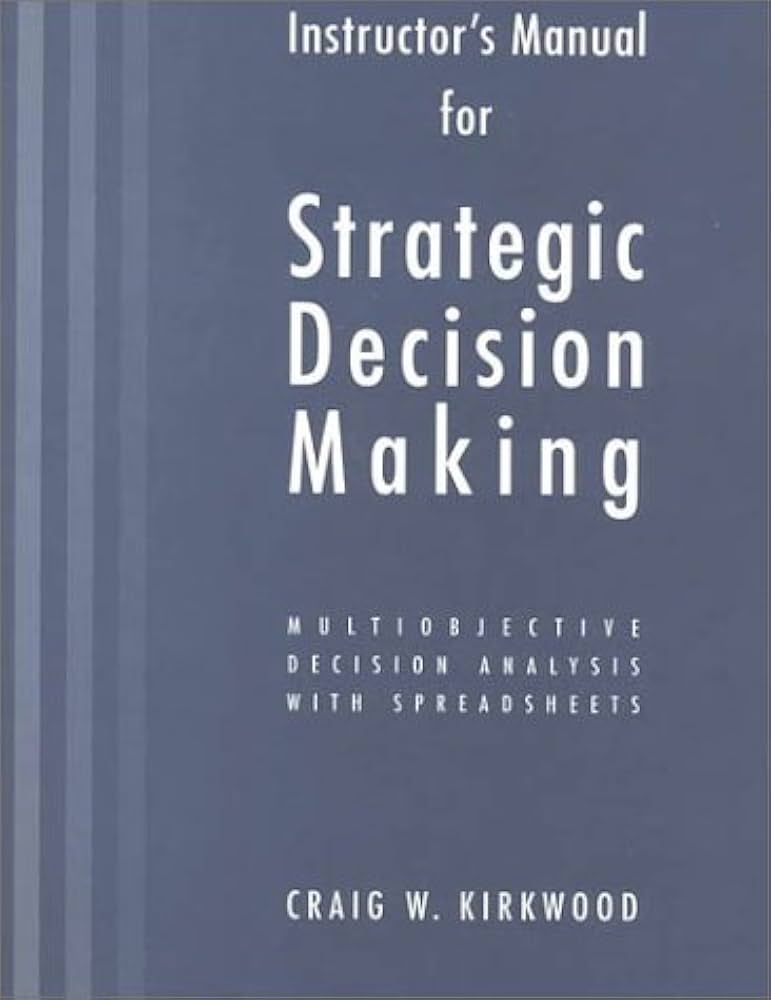
Strategic Decision Making by Craig W. Kirkwood – Covers tools and models for framing and solving complex product and business decisions.
MUST READ BLOGS:
- Design Sprint Academy: How Problem Framing Helps Product Managers Align Stakeholders on Real Issues
Explains how structured framing moves teams away from quick-fix solutions, fosters alignment, and helps PMs win buy‑in by grounding decisions in real customer and business needs. Read More.
- ProdPad: The Product Management Problem Statement: How to Get It Right
Presents problem statements as living documents, teaching how to craft crisp user‑centered statements (using 5 Ws + H, SCQA, JTBD), and explains when to revisit them. Read More.
- Mural: A Guide to Problem Framing: Best Practices & Templates
Breaks down why framing is essential, how it ensures clarity and alignment, and offers a practical step-by-step roadmap alongside useful templates . Read More.
Frameworks & Mental Models:
| Framework / Model | What It Is | Why It’s Useful | Example |
|---|---|---|---|
| How Might We (IDEO) | A question-based method to turn challenges into design opportunities. | Encourages open-ended, creative exploration of user problems. | “How might we reduce user drop-off during onboarding?” |
| Jobs To Be Done (JTBD) | A framework to identify what users are trying to accomplish, not just what they ask for. | Focuses on user outcomes, avoiding solution bias. | “Hire” Spotify to make workouts more fun. |
| SCQA | Storytelling structure: Situation, Complication, Question, Answer. | Clarifies the problem context, aligns teams around one core question. | “Our conversion rates dropped (S), due to longer form (C), so what’s the fix? (Q)” |
| 5 Whys | Iterative question method to get to the root cause. | Avoids treating symptoms as core problems by digging deeper. | “Why did the user churn?” → “App was slow” → “Backend delay” → … |
| Double Diamond | Design framework with 4 phases: Discover, Define, Develop, Deliver. | Ensures divergence before convergence—frame before solving. | Used in most design sprints. |
| First Principles Thinking | Break problems into basic truths and rebuild from scratch. | Helps identify flawed assumptions and opens doors to innovative thinking. | “Why do we assume delivery must be in 30 mins?” |
| Reframing Matrix | Looks at the problem from multiple perspectives (user, tech, biz, ops). | Builds cross-functional alignment and uncovers blind spots. | How do tech vs ops view a failed payment? |
Practice Methods:
Problem Framing Mondays: Start each week with one real or hypothetical product problem, then spend 20–30 mins writing 2–3 alternative frames.
Reverse Problem Framing: Take existing solutions (like Uber) and work backward to hypothesize the problem it was trying to solve.
Collaborative Framing Sessions: Run mock team discussions to practice reaching consensus on “what exactly is the problem?”
 The ProductBrain