
IMPROVING SWISH POST ORDER EXPERIENCE
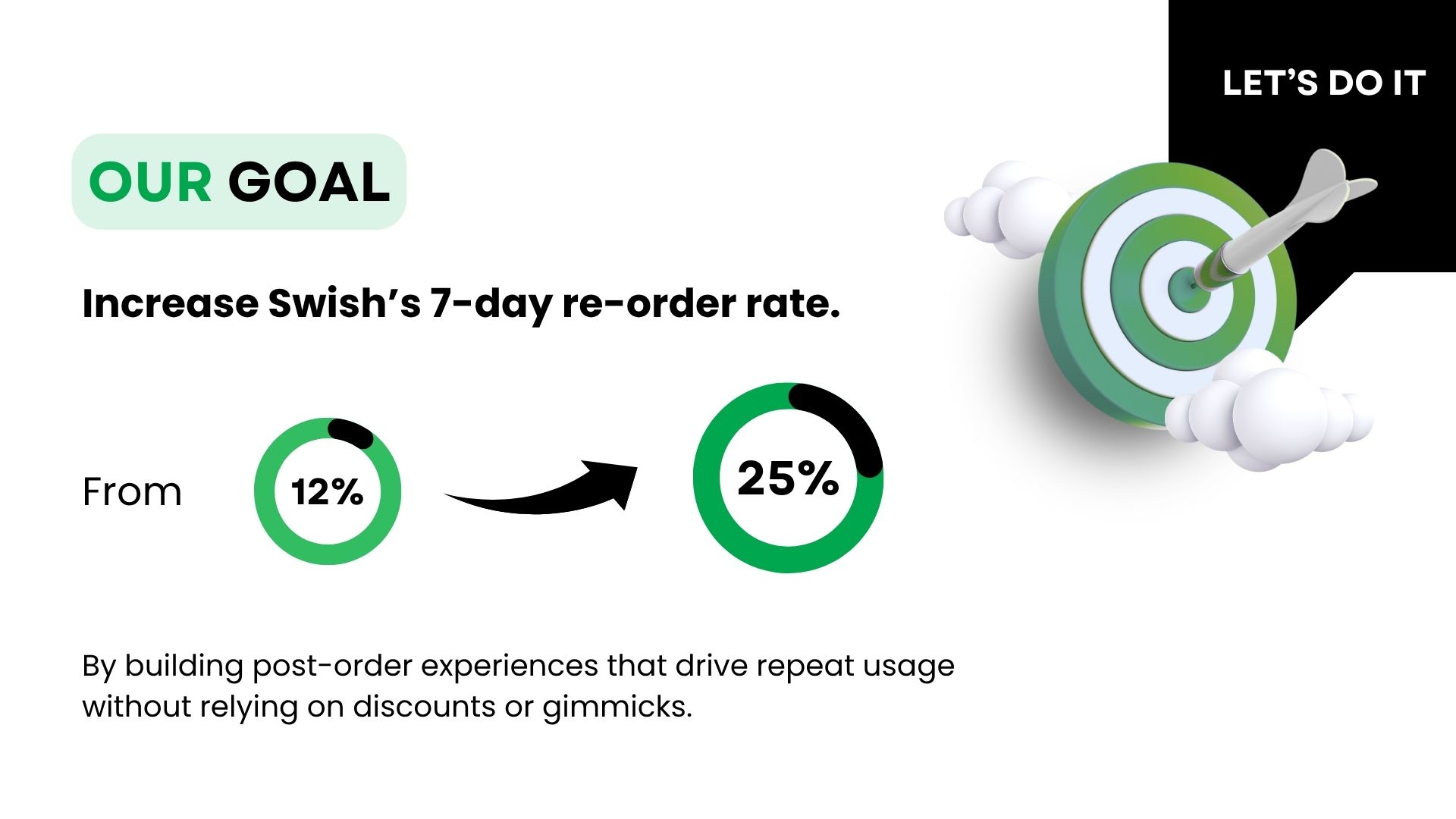
GOAL: To increase Swish’s 7-day reorder rate from 12% to 25% by improving the post-order experience — turning one-time users into loyal repeat customers. The aim was to understand why engagement drops after delivery, uncover key friction points, and design experiences that build trust, satisfaction, and long-term retention without relying on discounts or gimmicks.
| Focus Area | What the Project Is Doing |
|---|---|
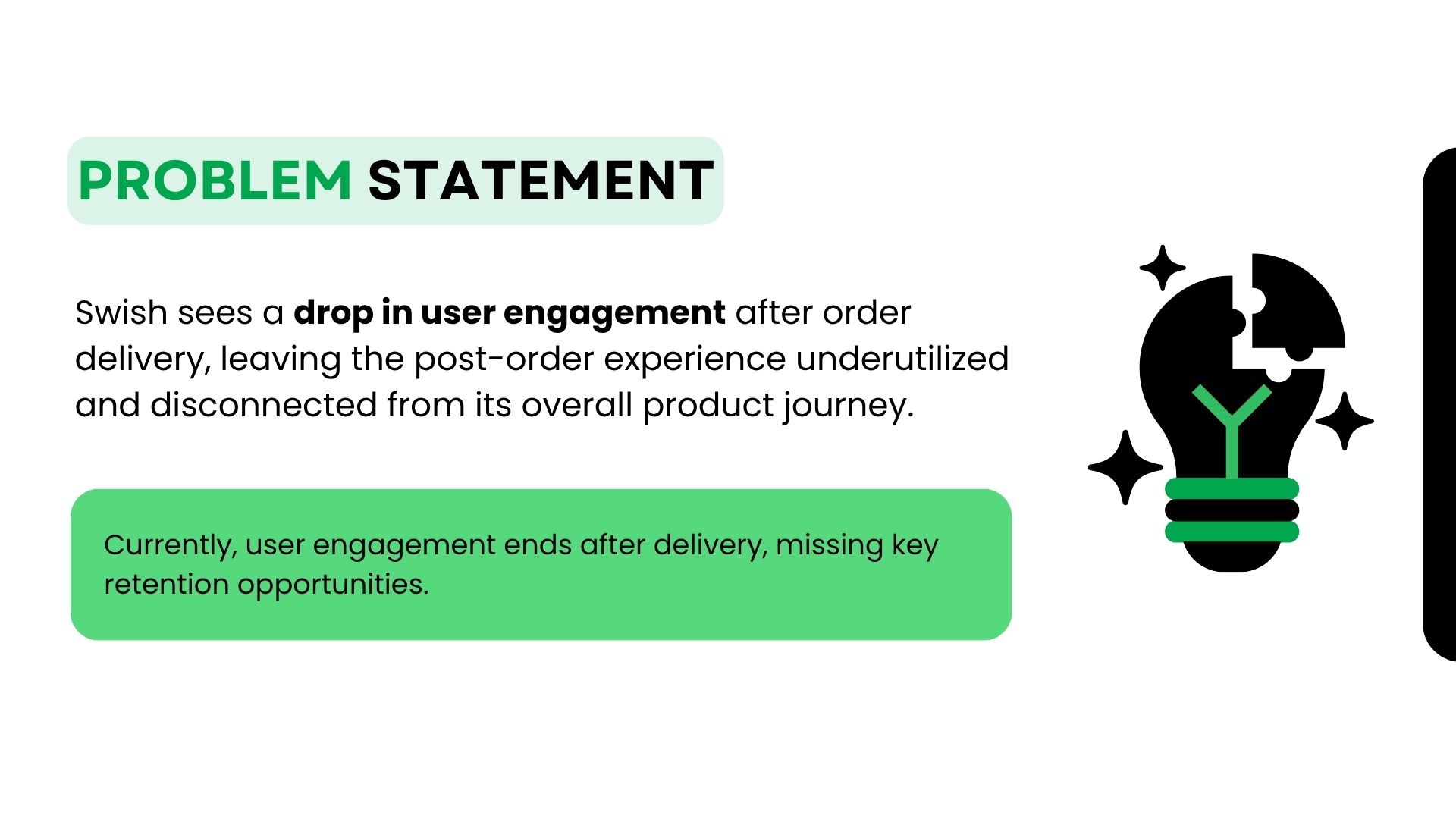
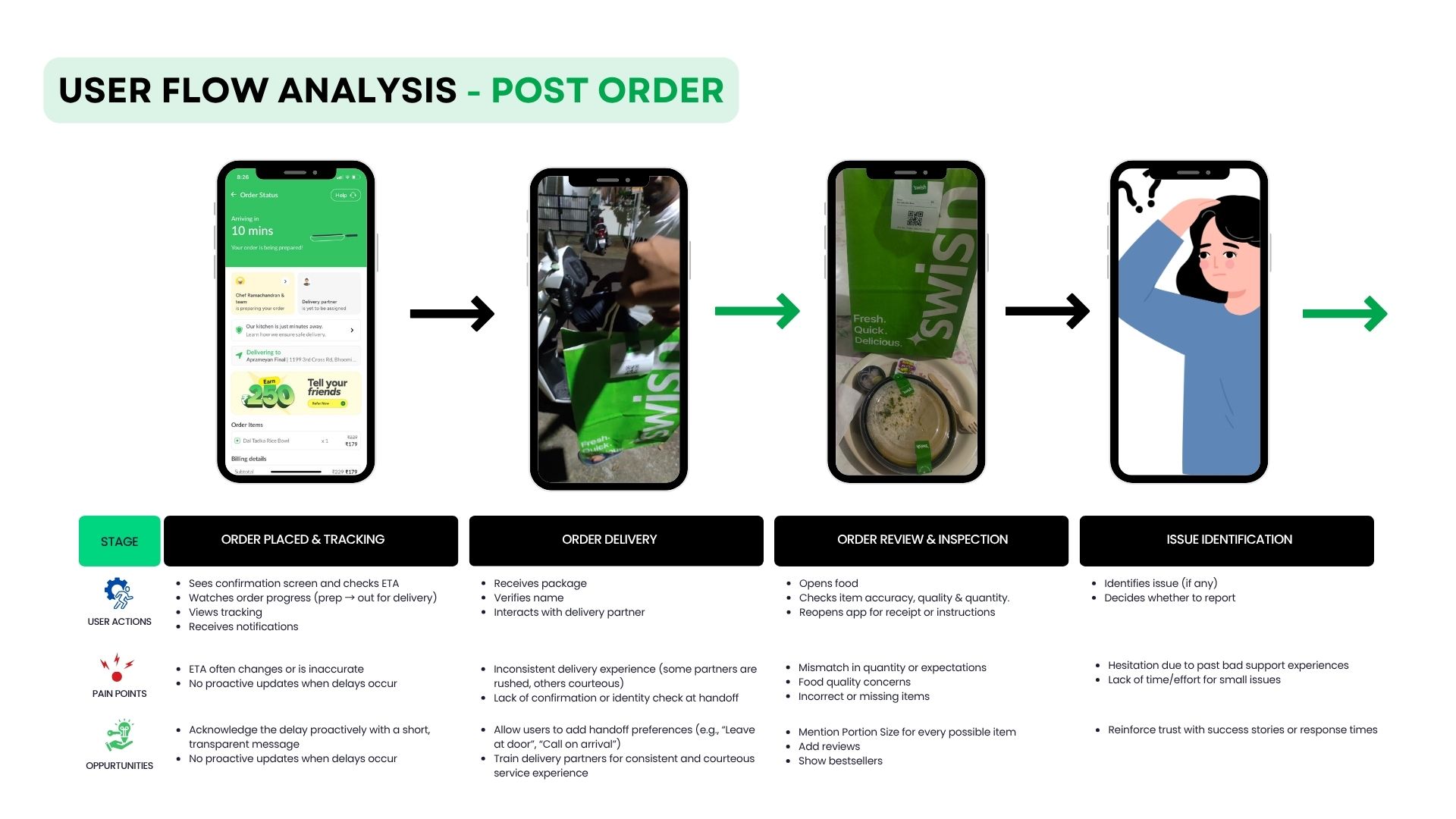
| Problem Statement | Swish noticed a sharp drop in user engagement immediately after delivery — the post-order experience was underutilized and disconnected from the overall journey. |
| Goal | Increase Swish’s 7-day reorder rate from 12% to 25% by enhancing the post-order experience and building long-term user trust. |
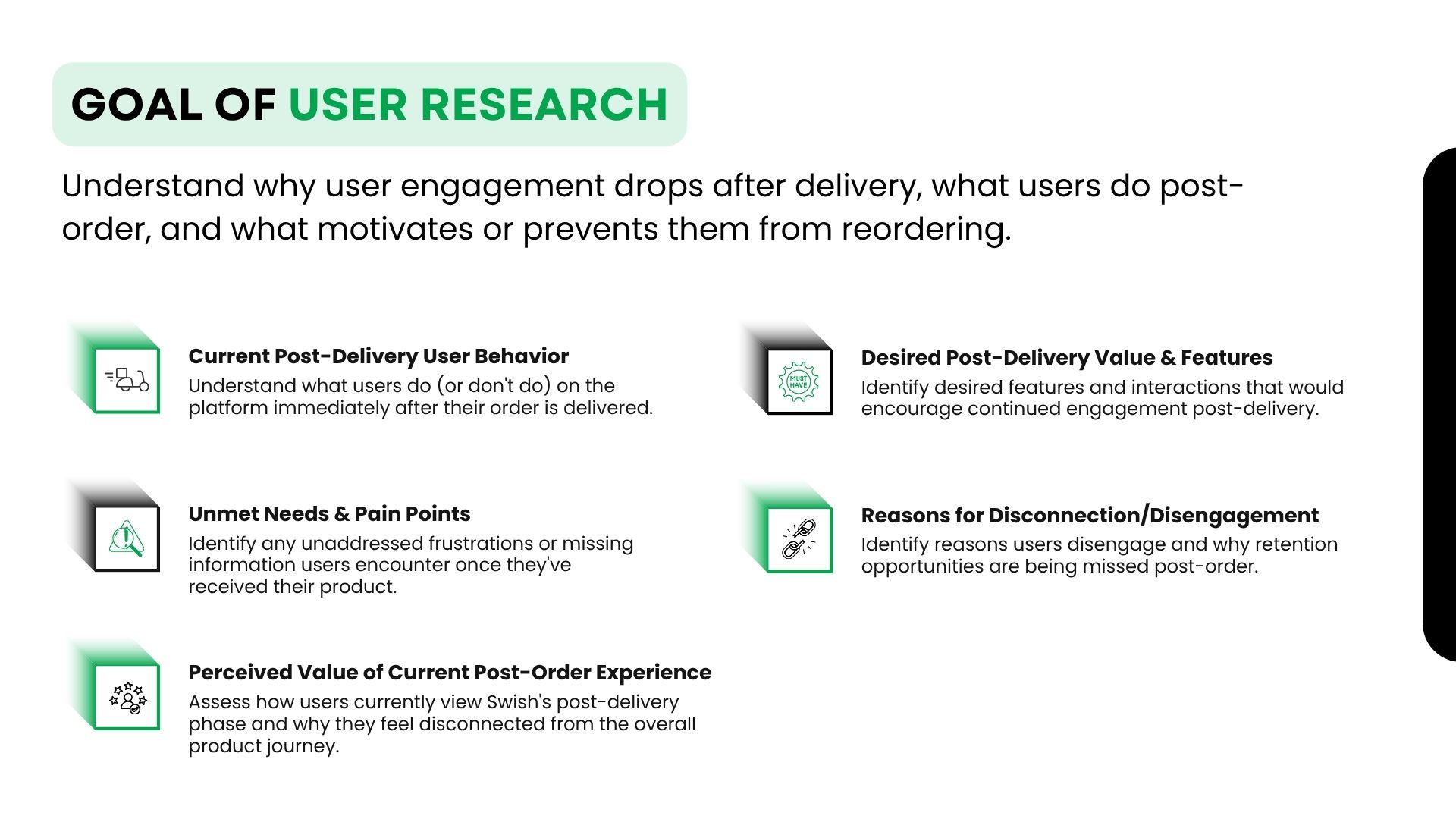
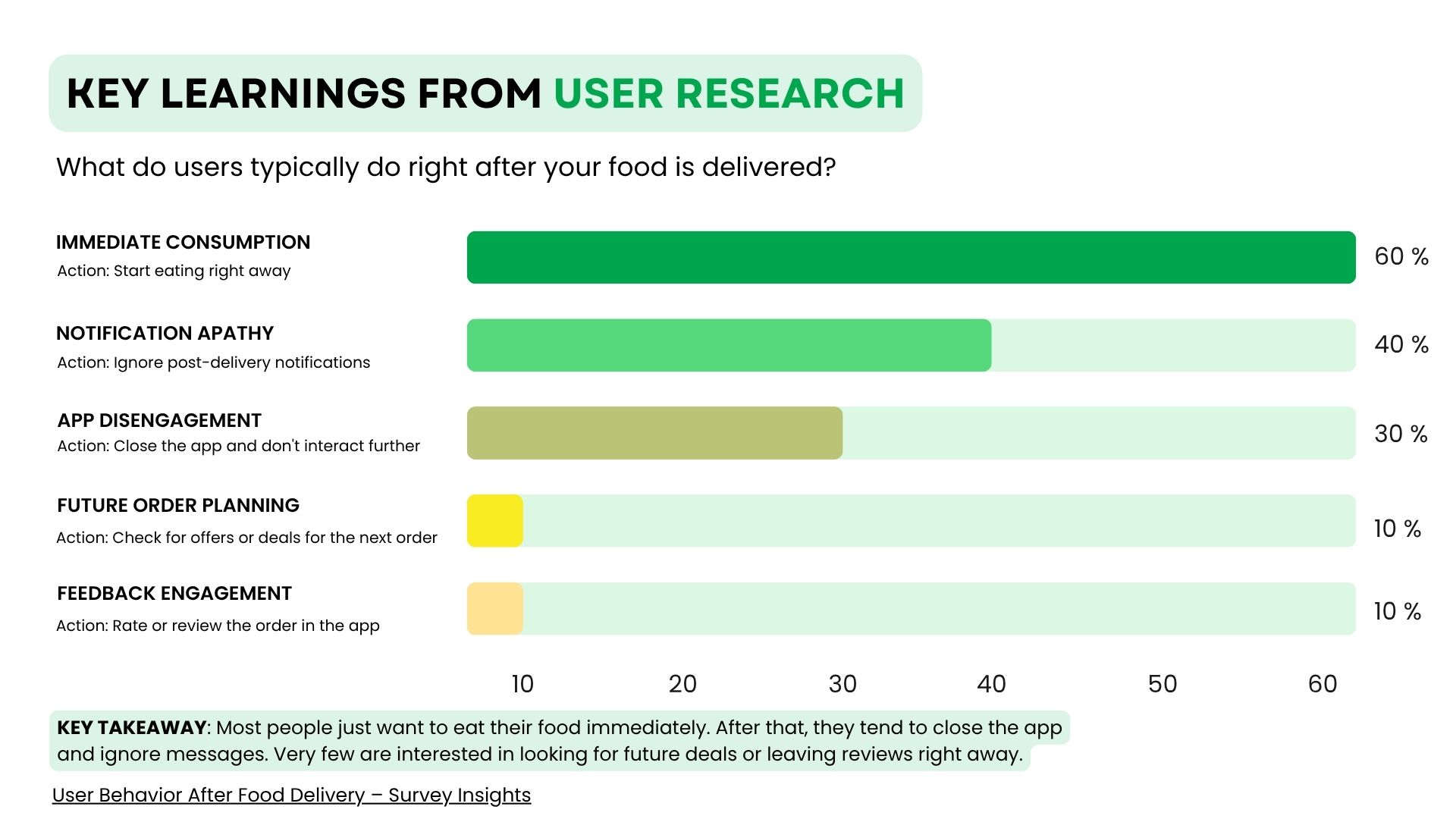
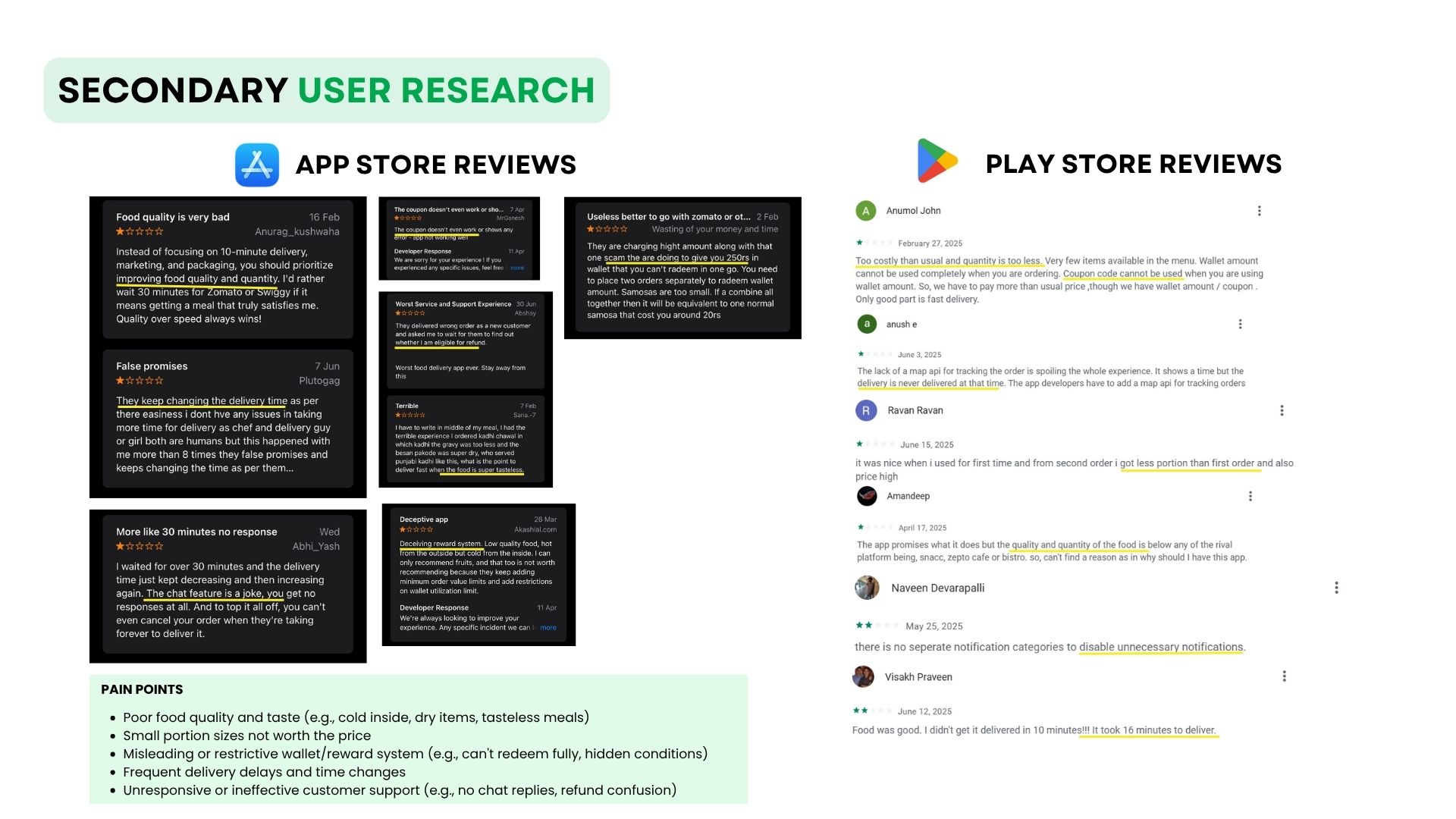
| User Research | Conducted qualitative and quantitative research to understand user behavior post-delivery, unmet needs, and factors causing disengagement. |
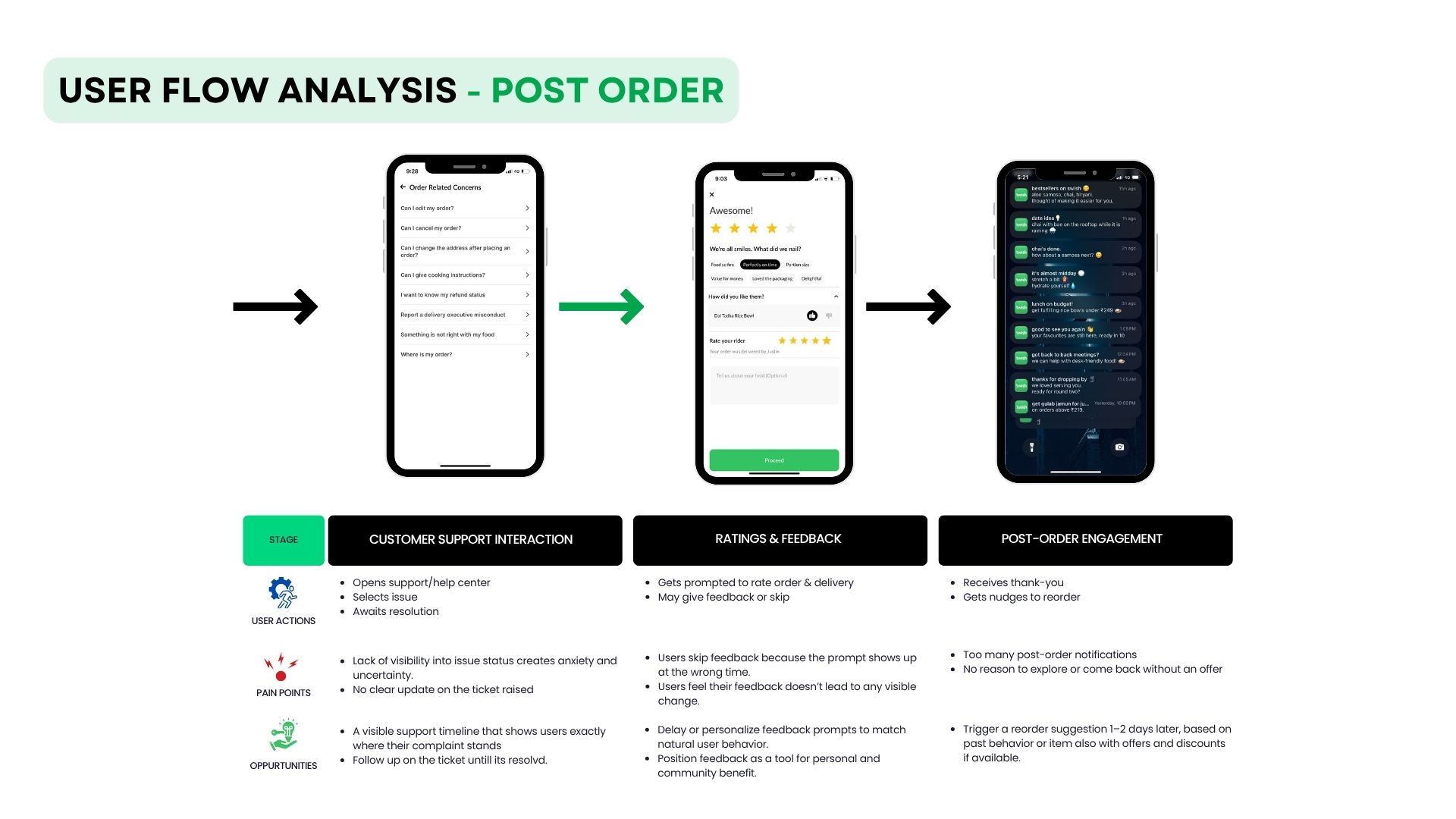
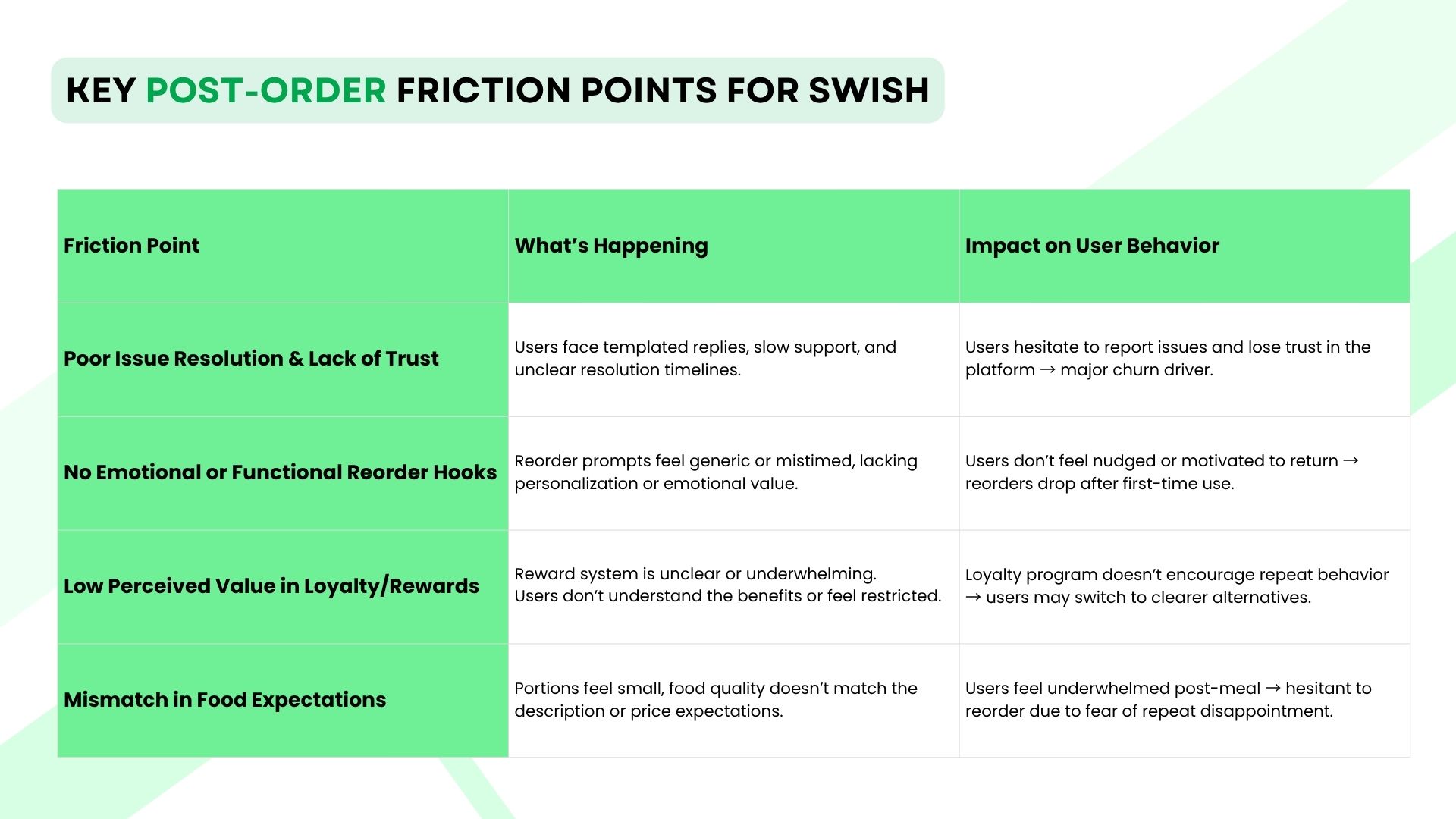
| Key Insights | Found that most users eat immediately and close the app, with low motivation to return. Poor issue resolution and unclear communication were key churn drivers. |
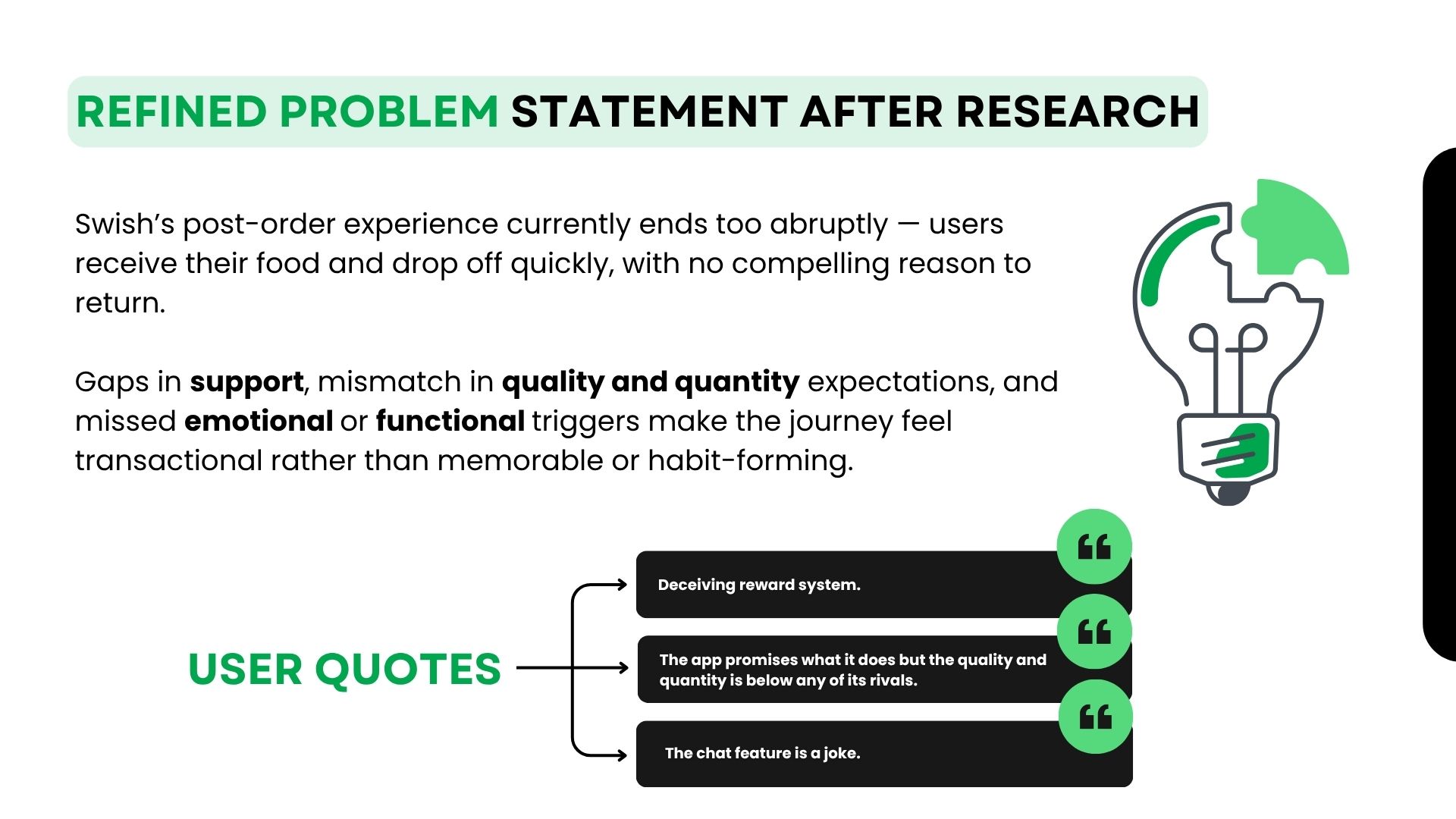
| Refined Problem | Swish’s post-order journey feels transactional rather than emotional, lacking trust, clarity, and retention hooks to bring users back. |
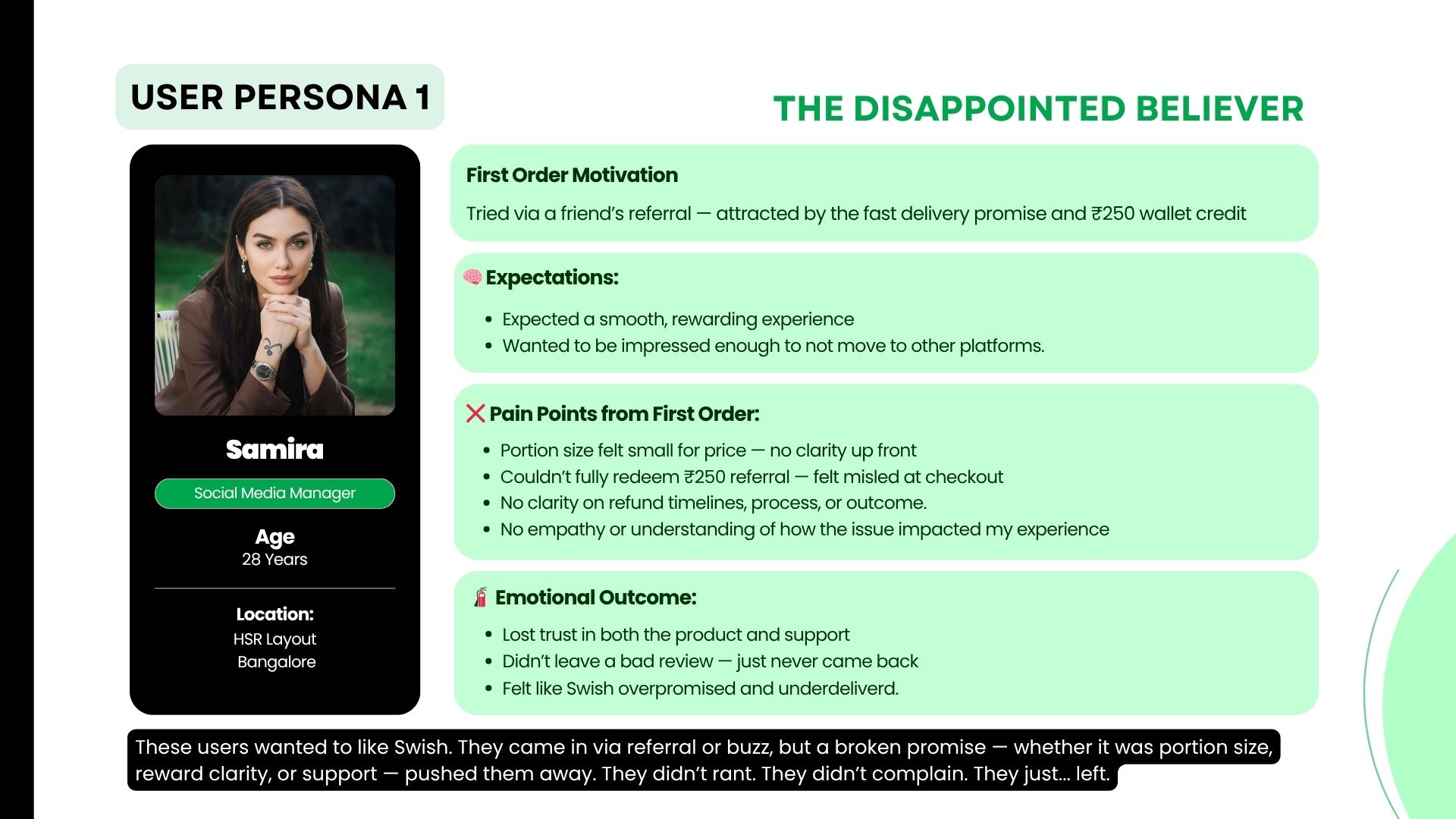
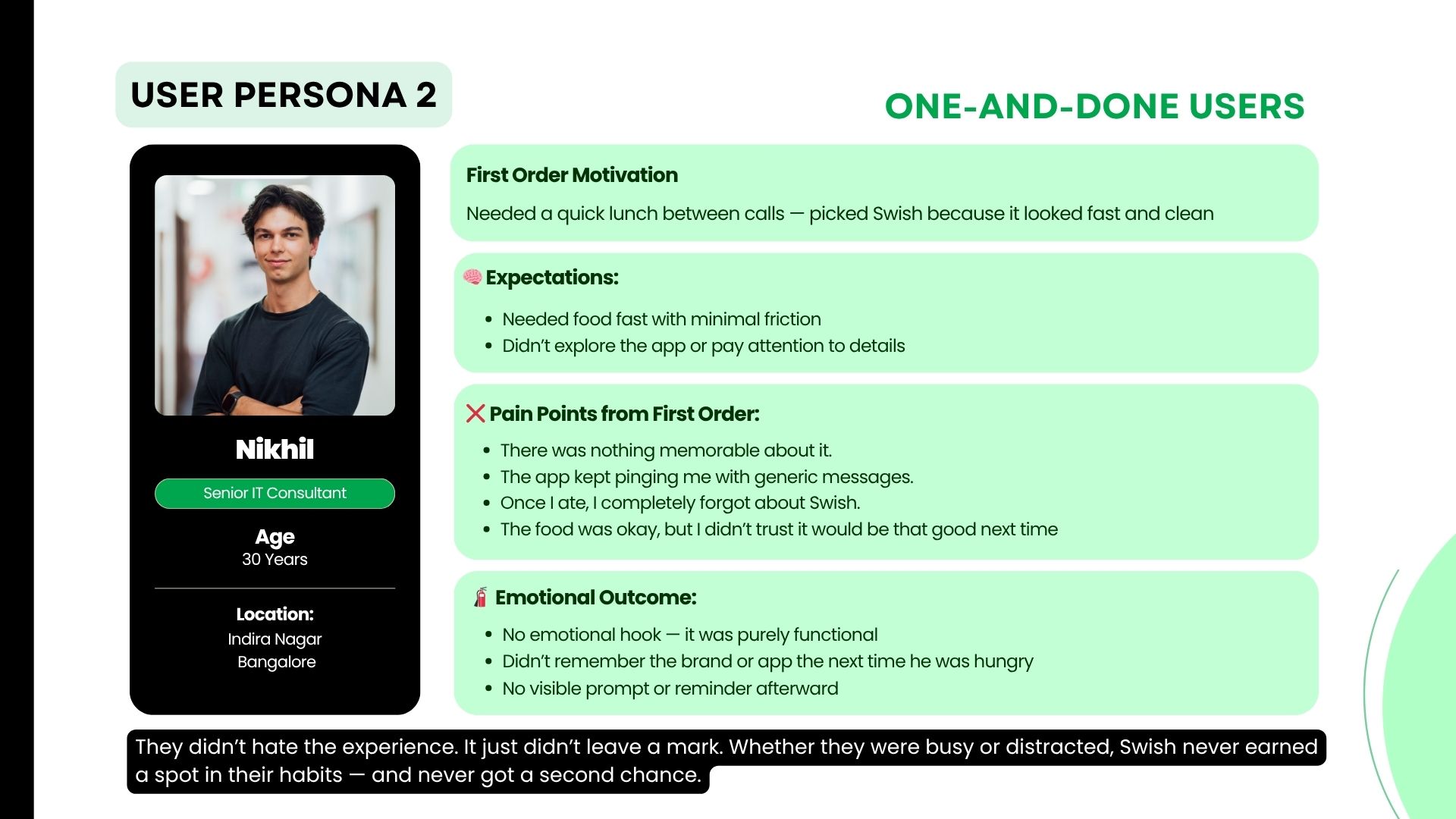
| Customer Segments | Identified two key user groups — Disappointed Believers (who lost trust after unmet expectations) and One-and-Done Users (who found the experience forgettable). |
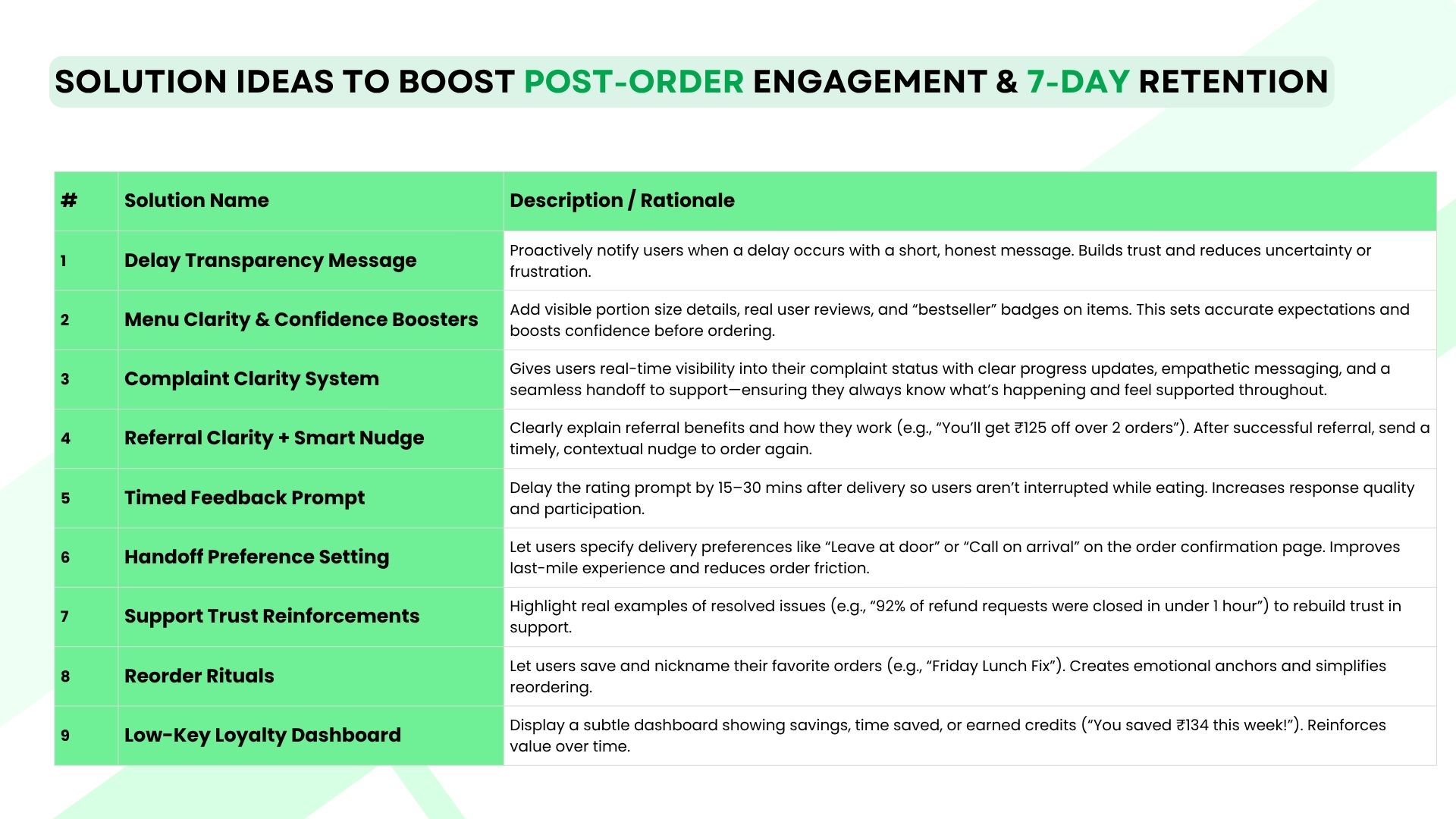
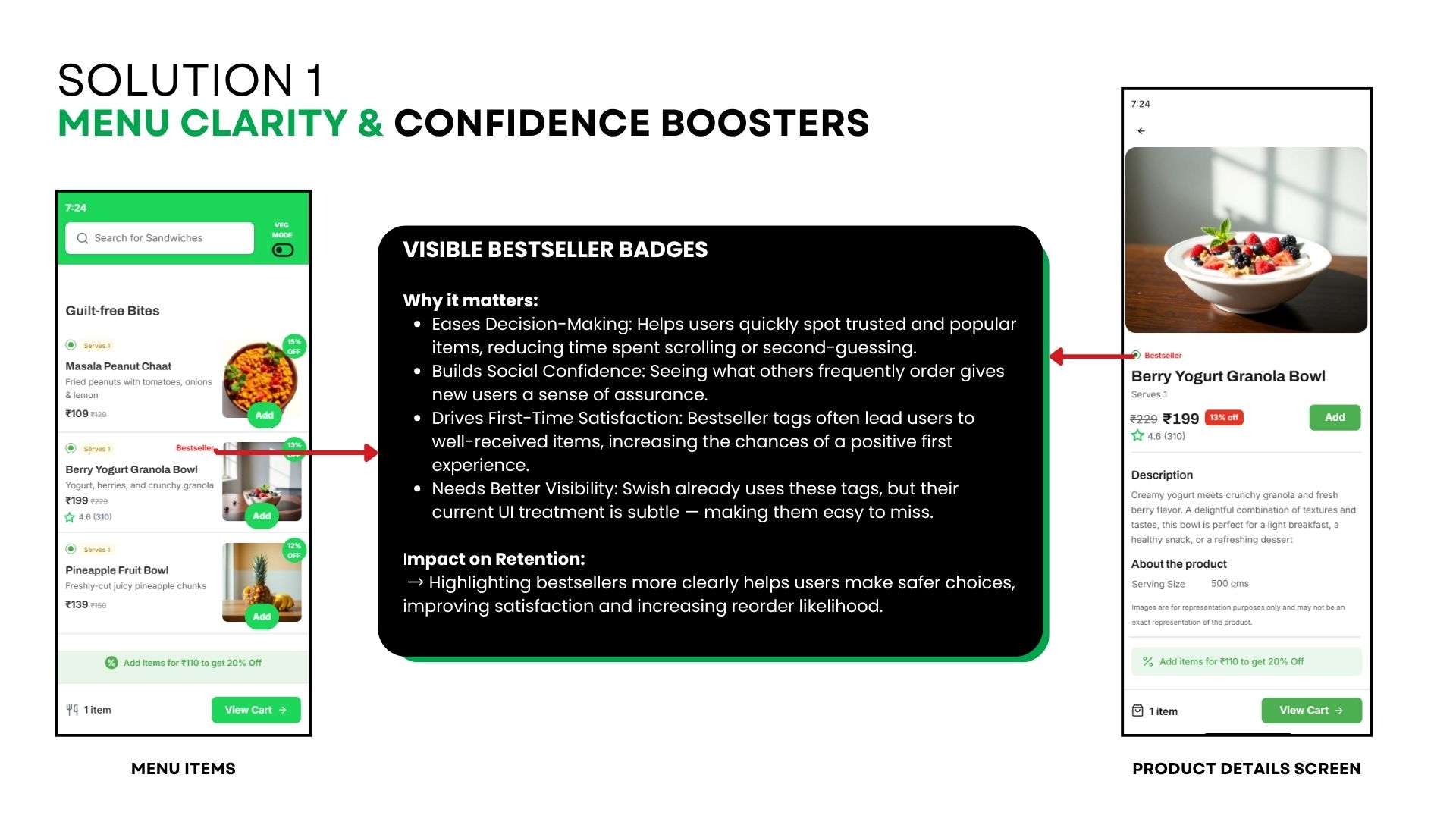
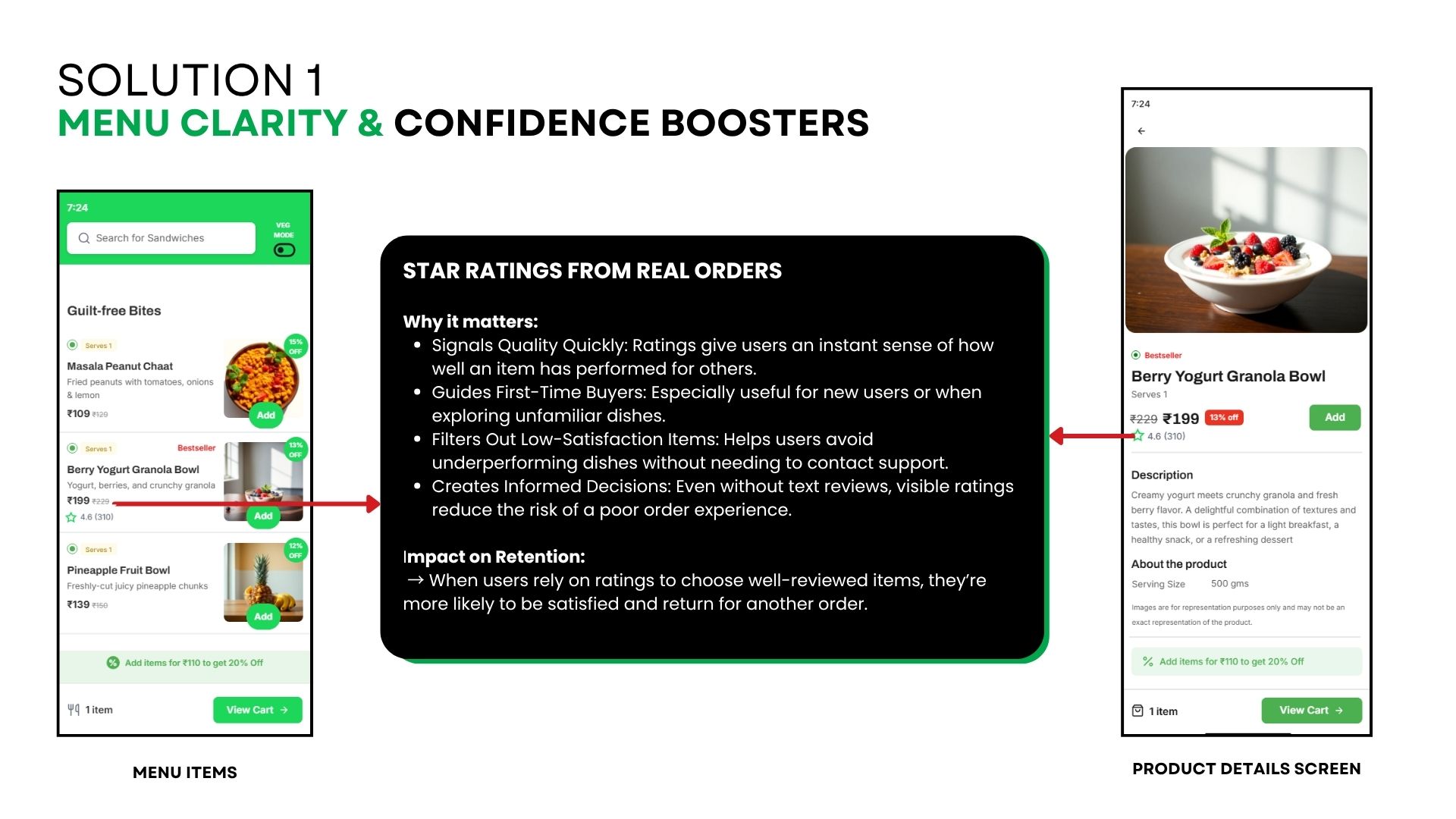
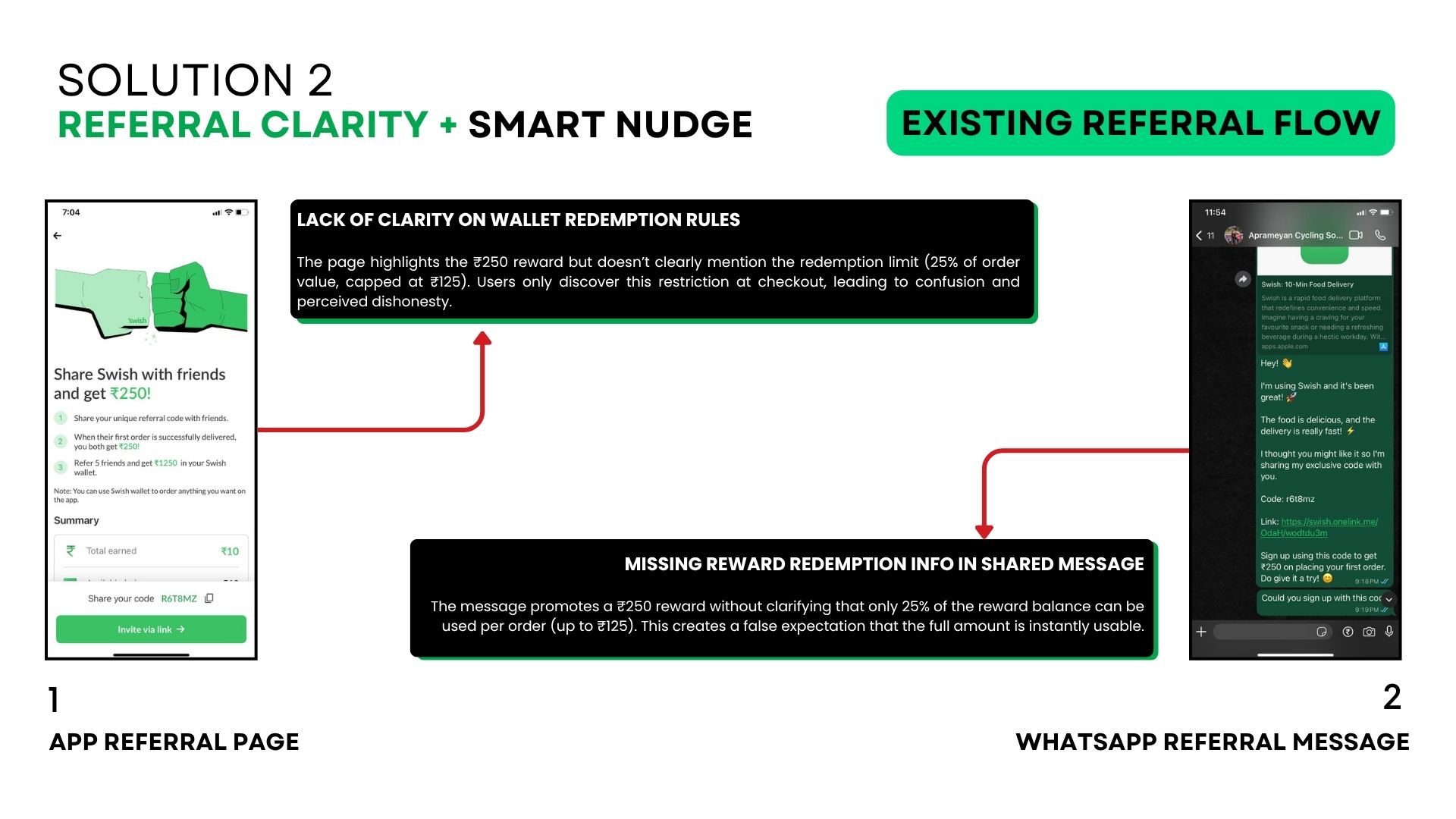
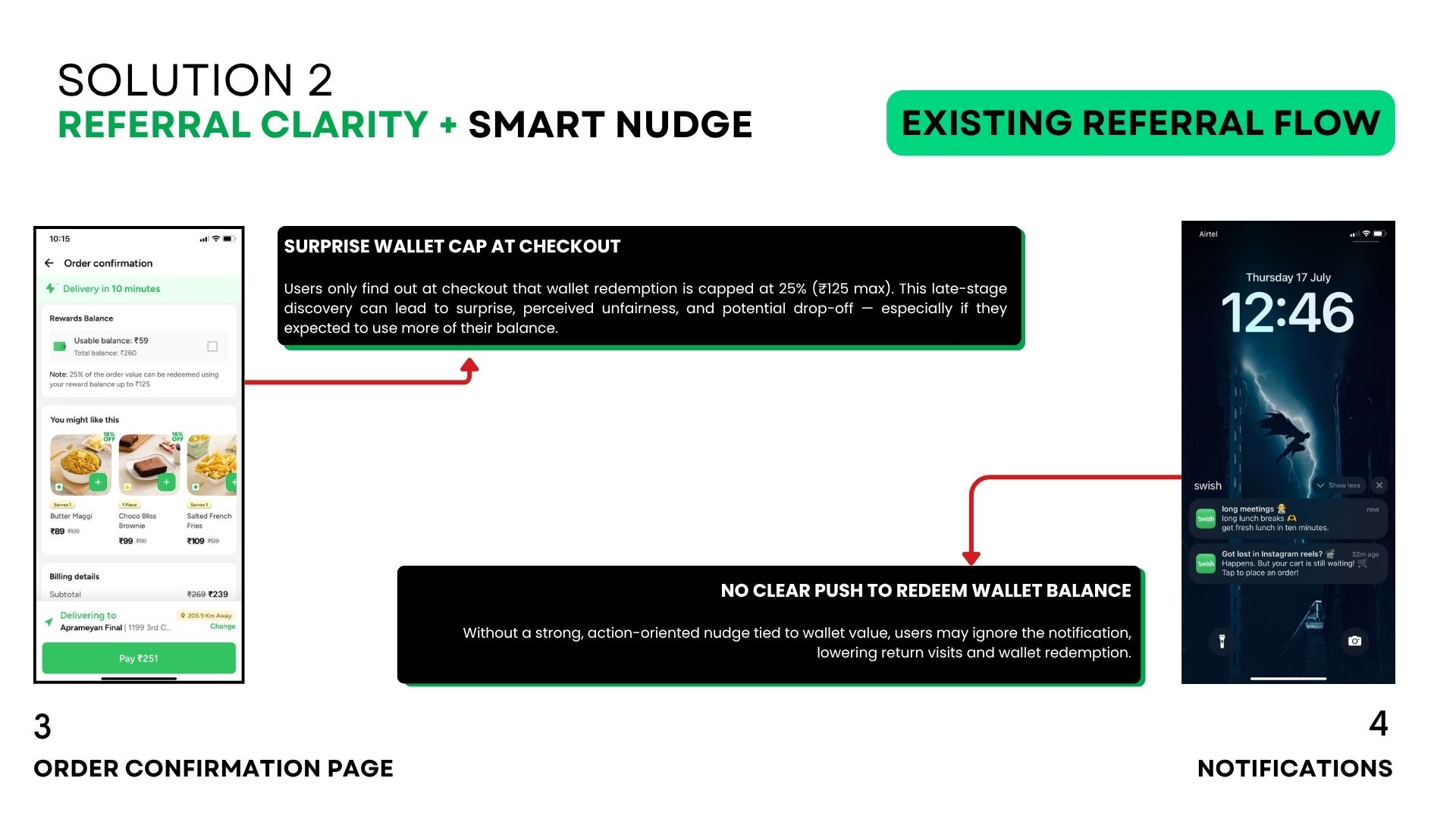
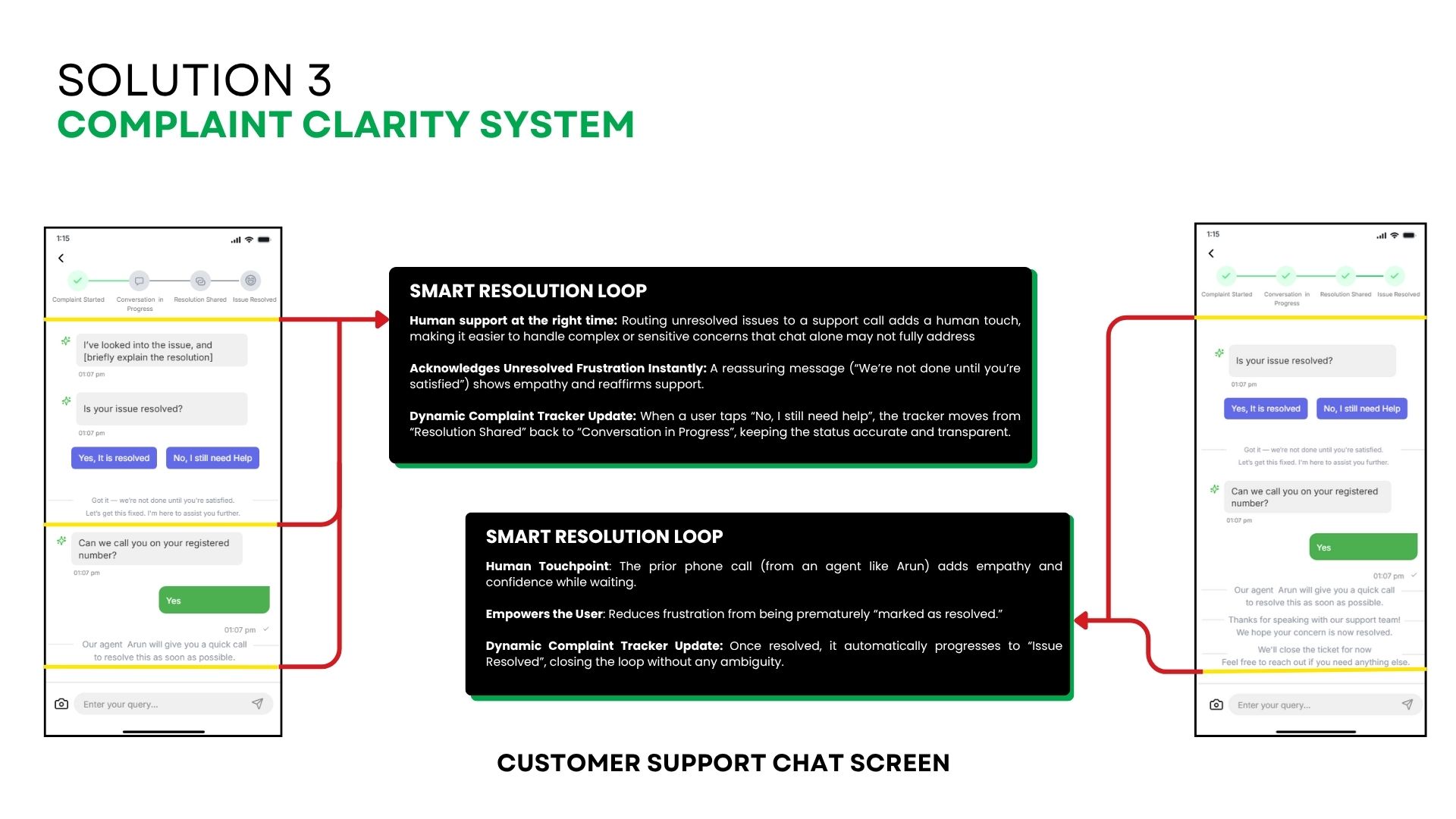
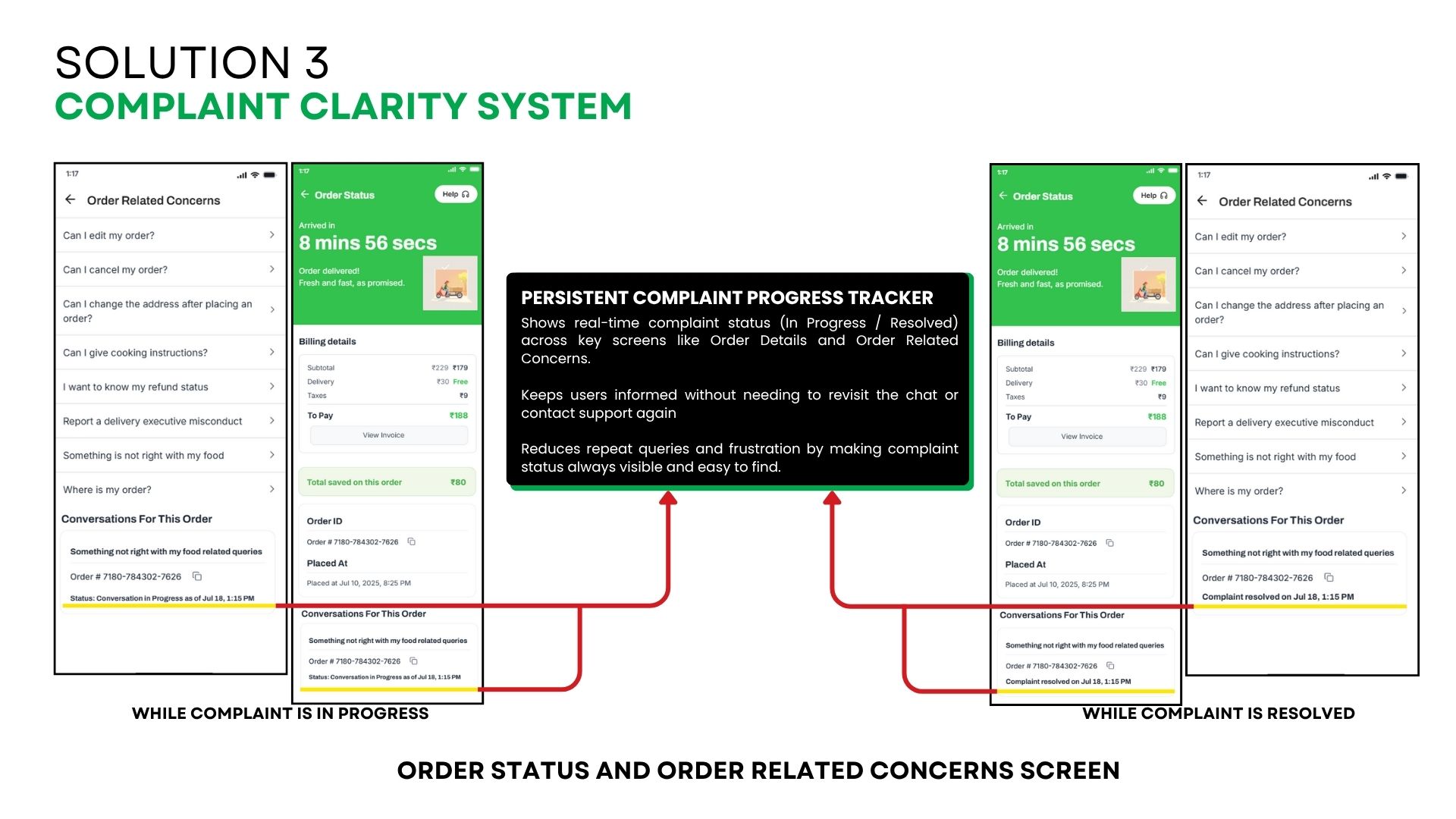
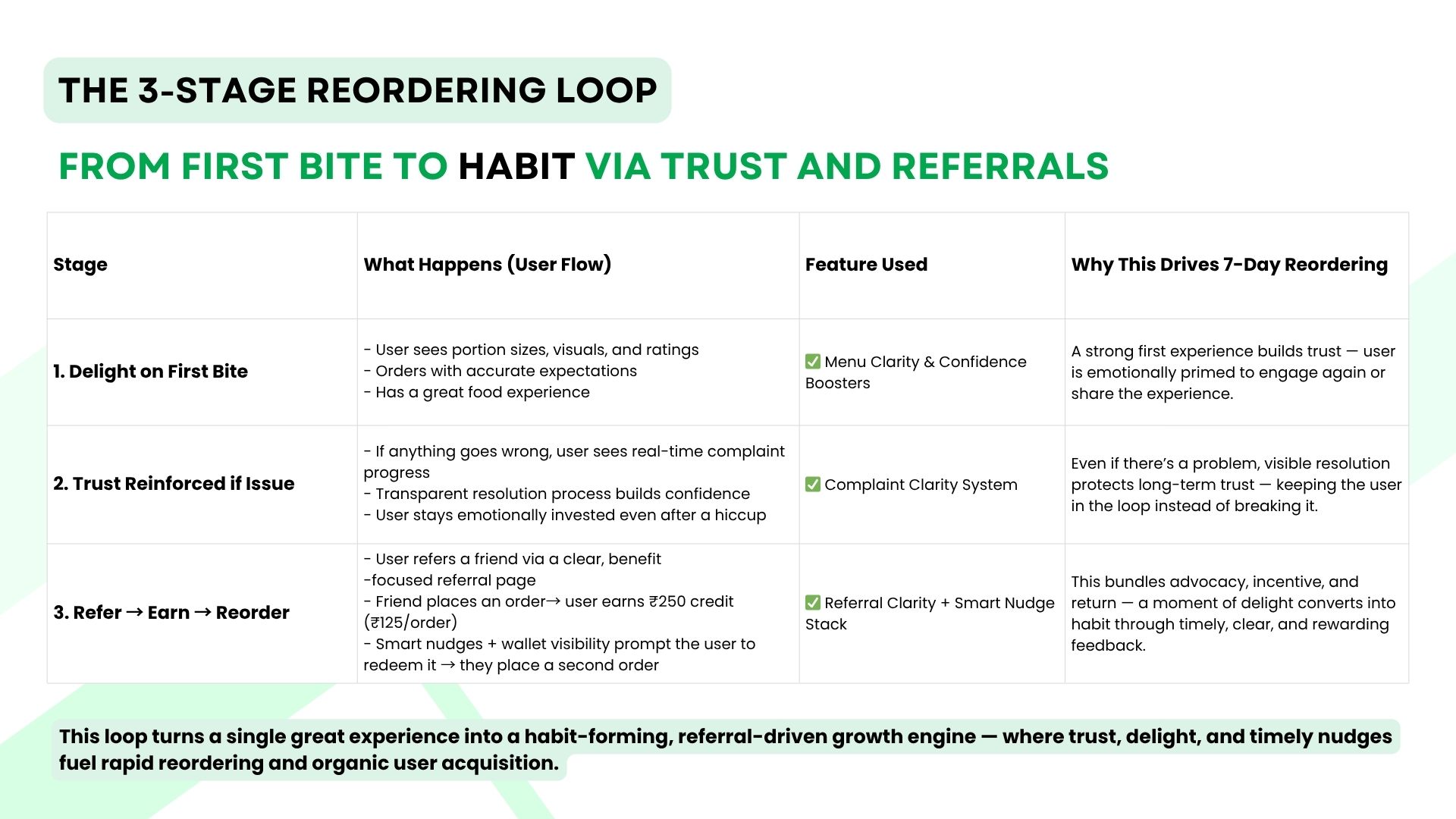
| Solutions | Designed experience improvements to rebuild trust, clarify communication, and trigger timely, meaningful re-engagement post-order. |
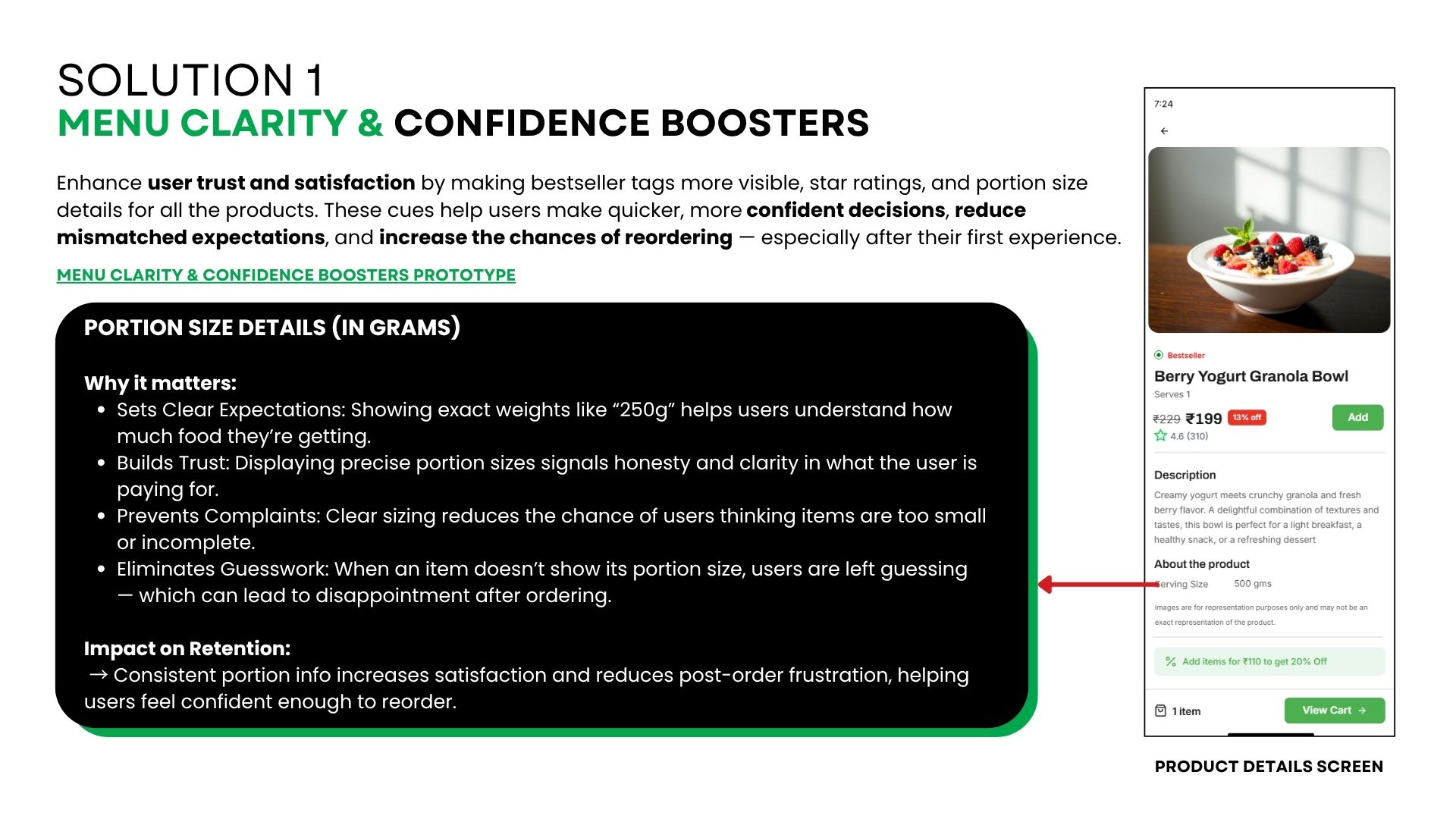
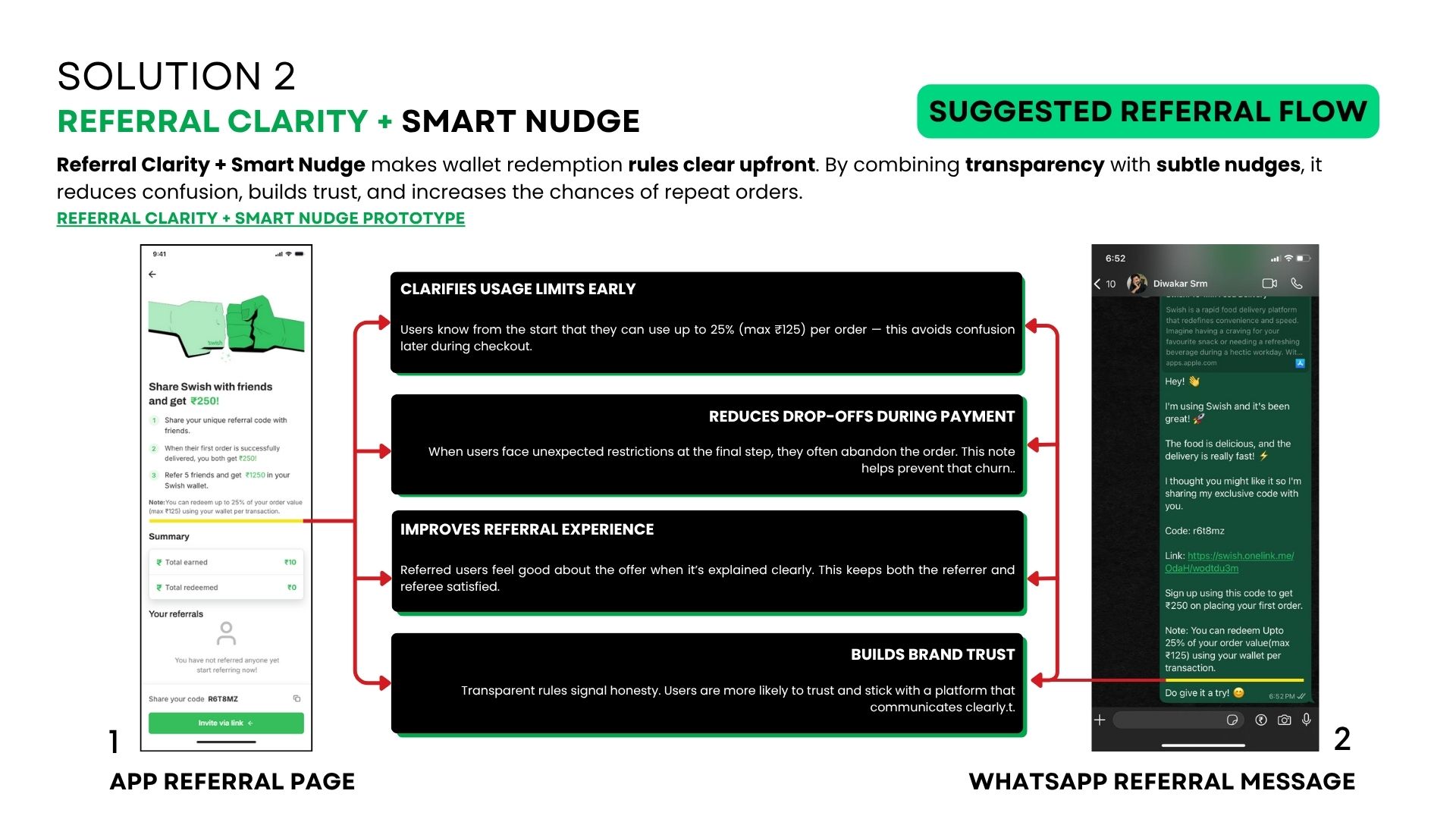
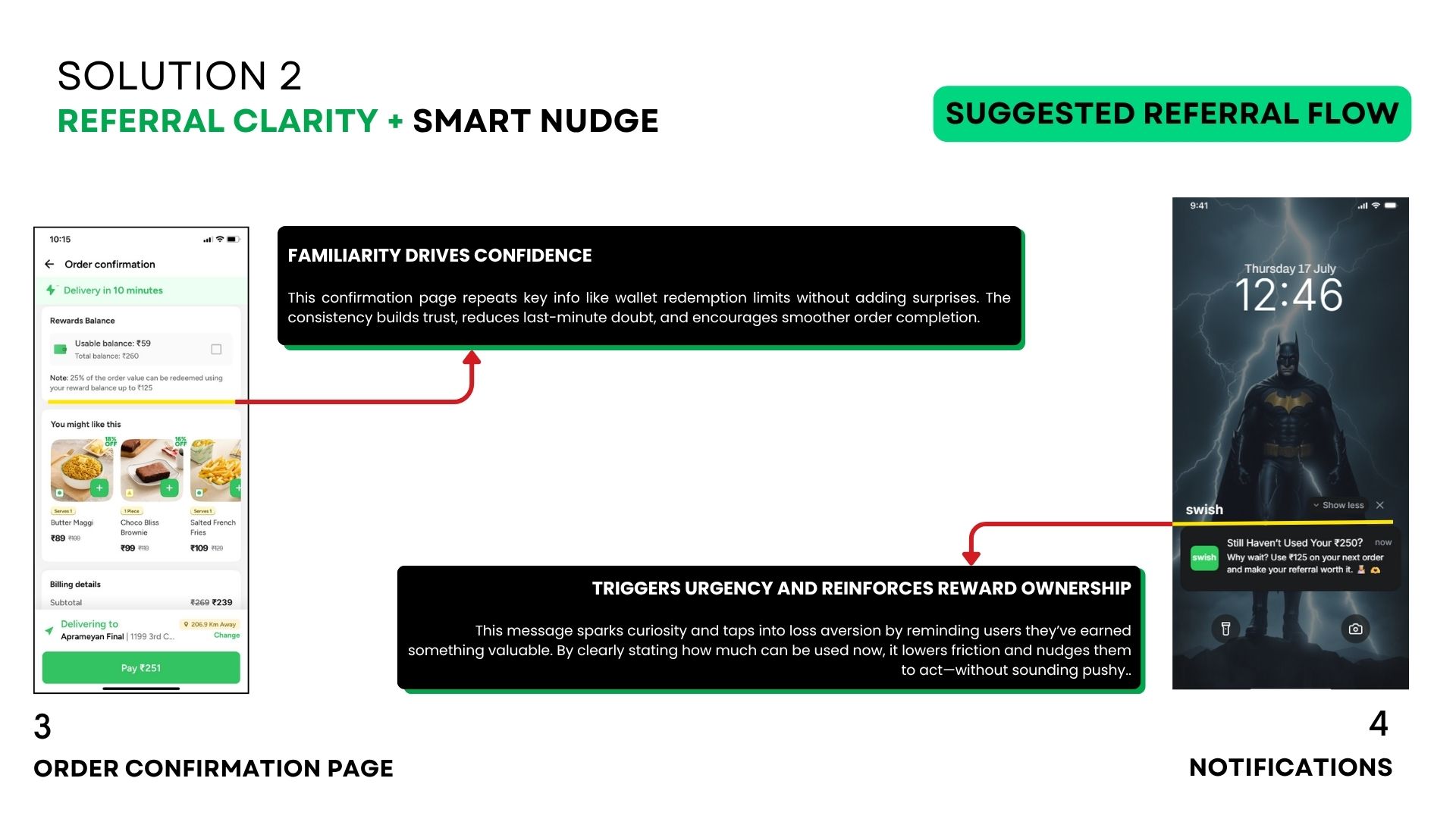
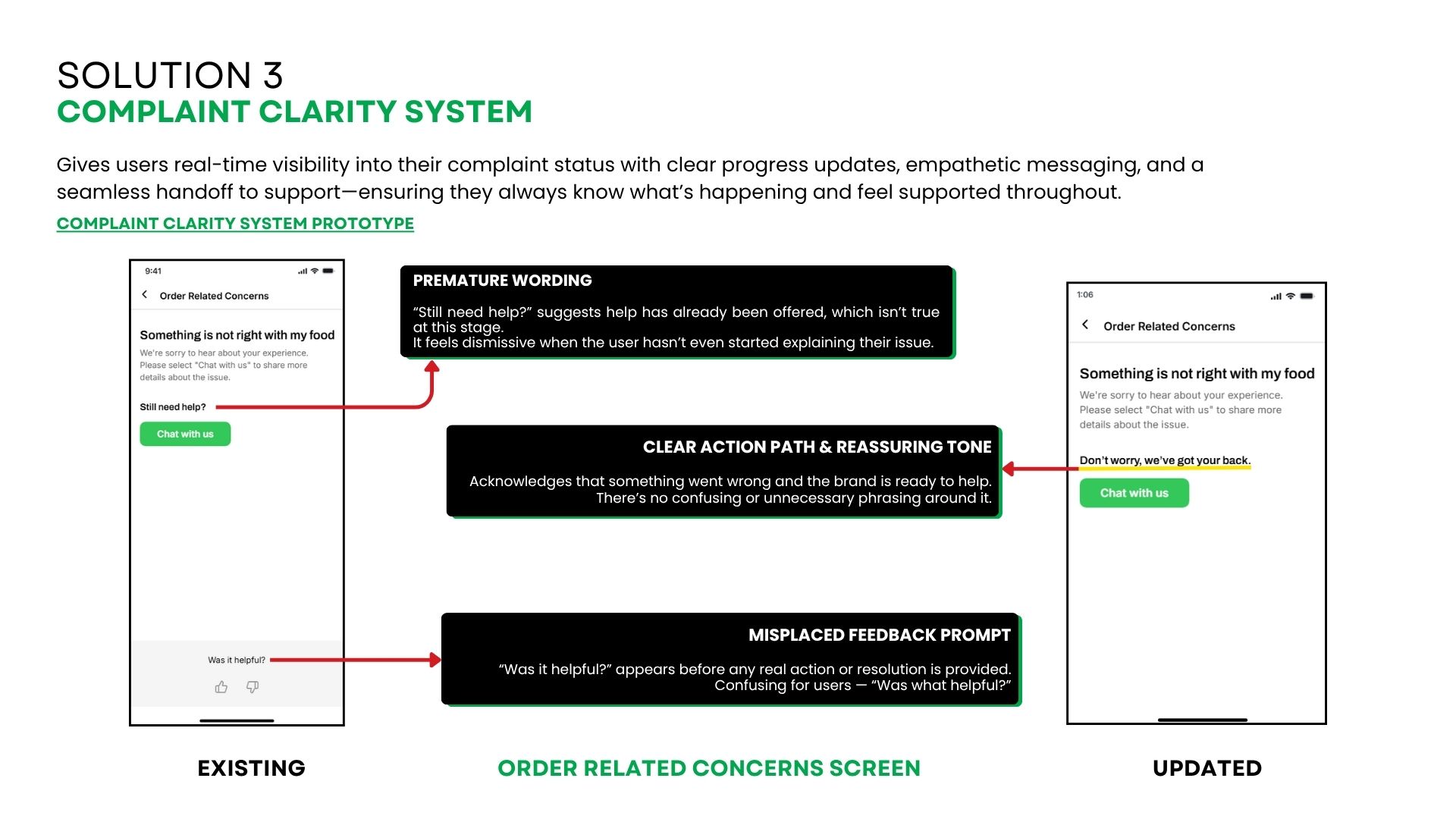
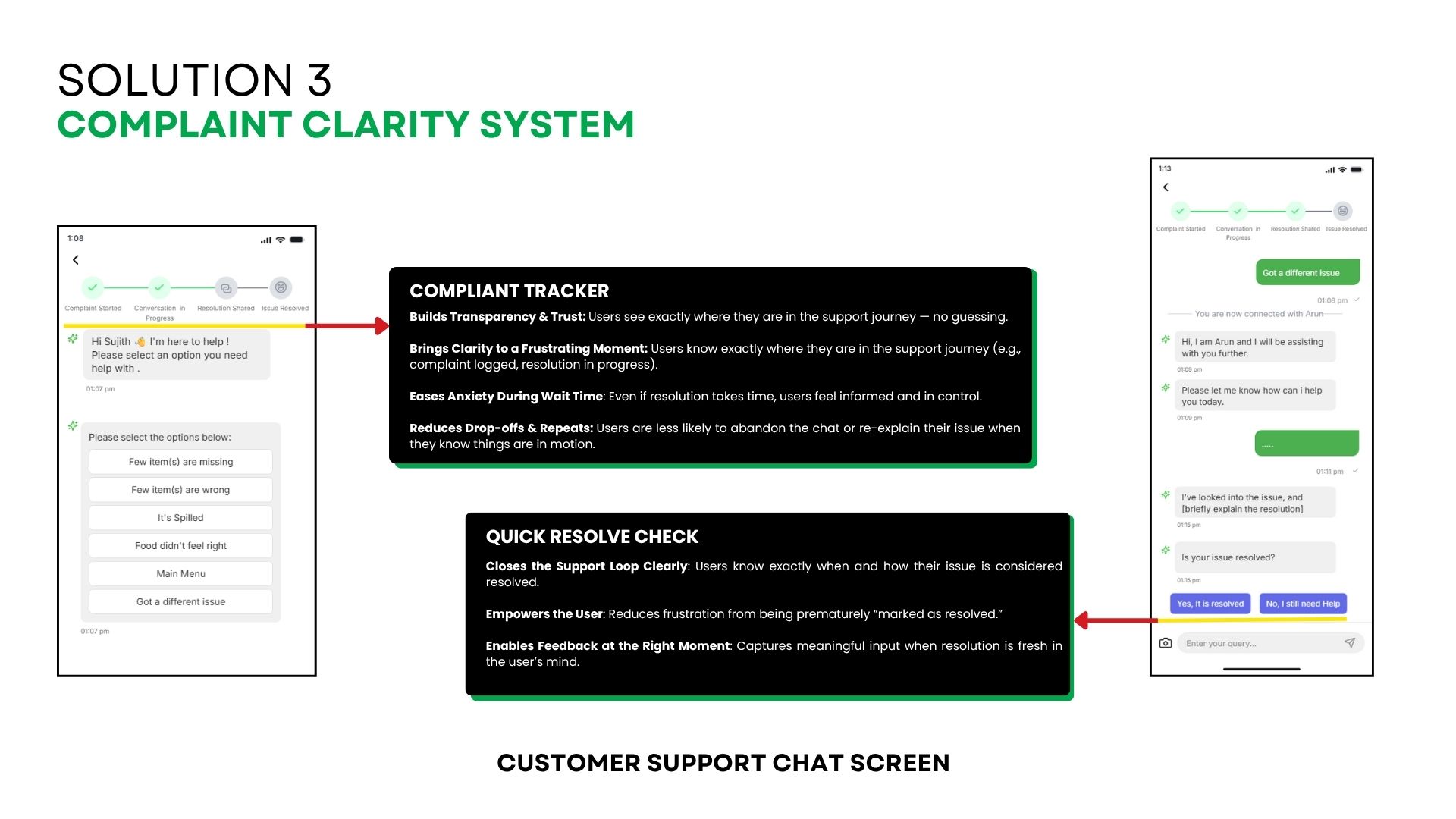
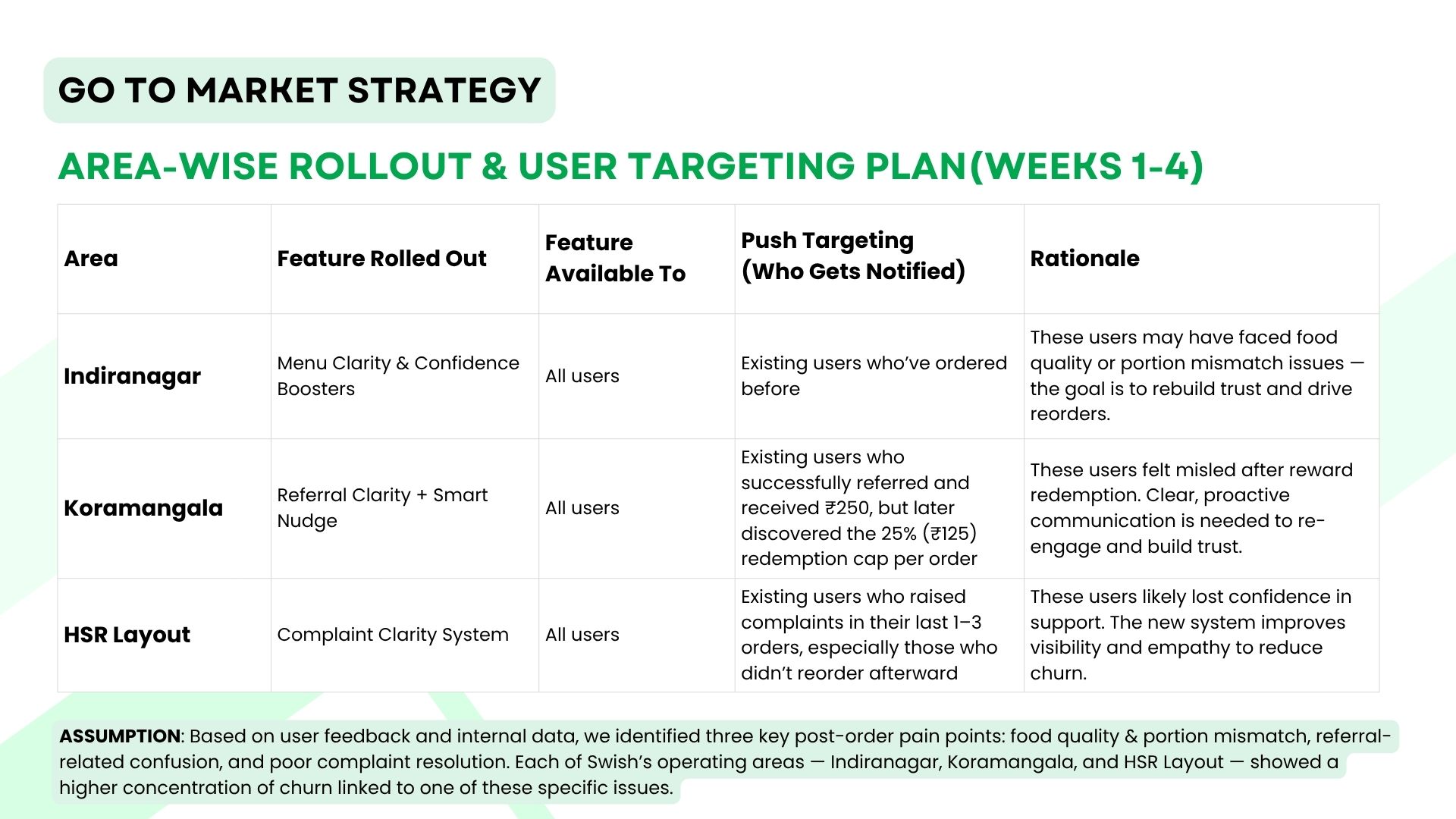
| Go-To-Market (GTM) Strategy | Rolled out features area-wise — Indiranagar (Menu Clarity), Koramangala (Referral Transparency), and HSR Layout (Complaint Clarity) — to test impact based on local churn drivers. |
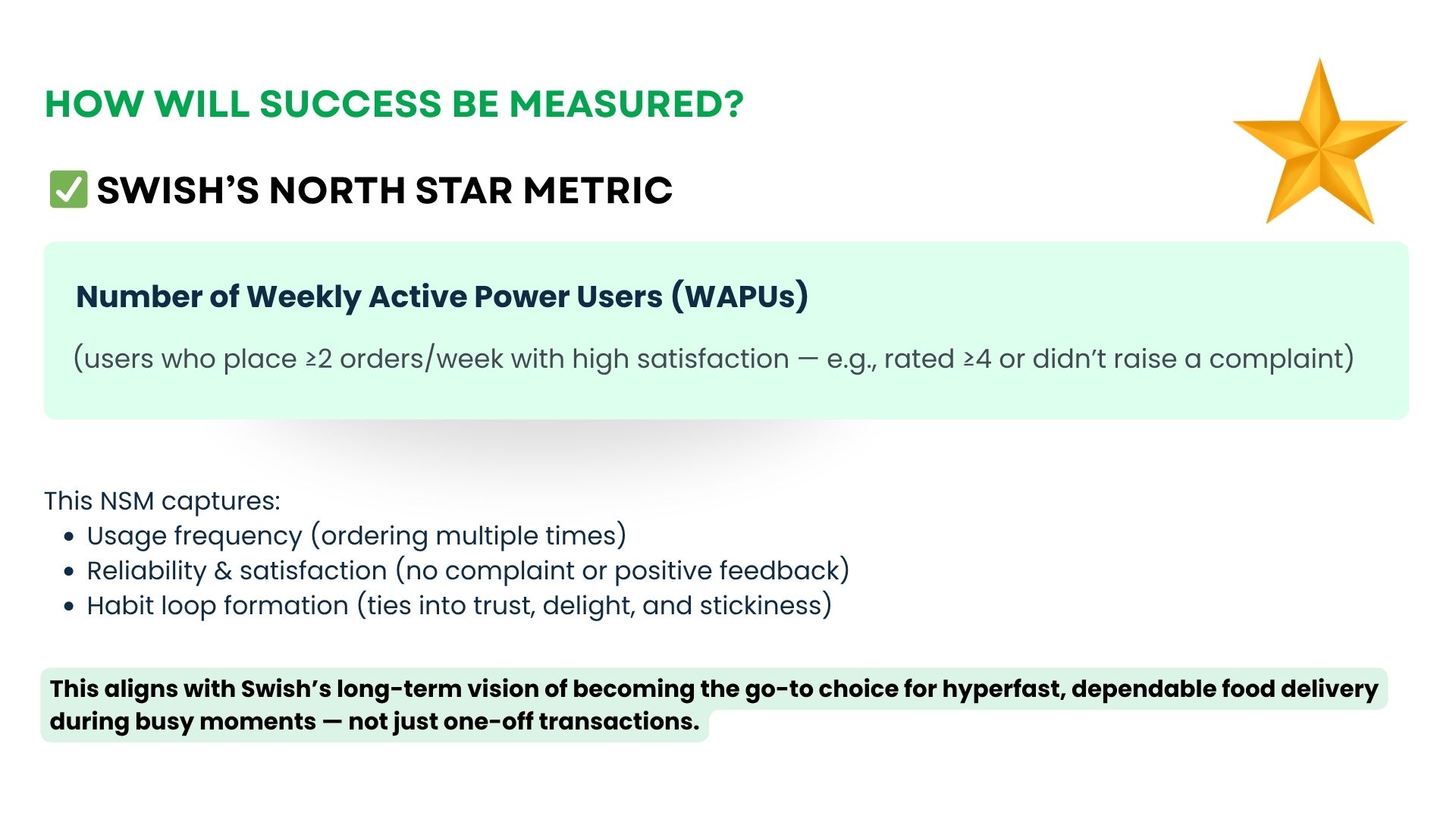
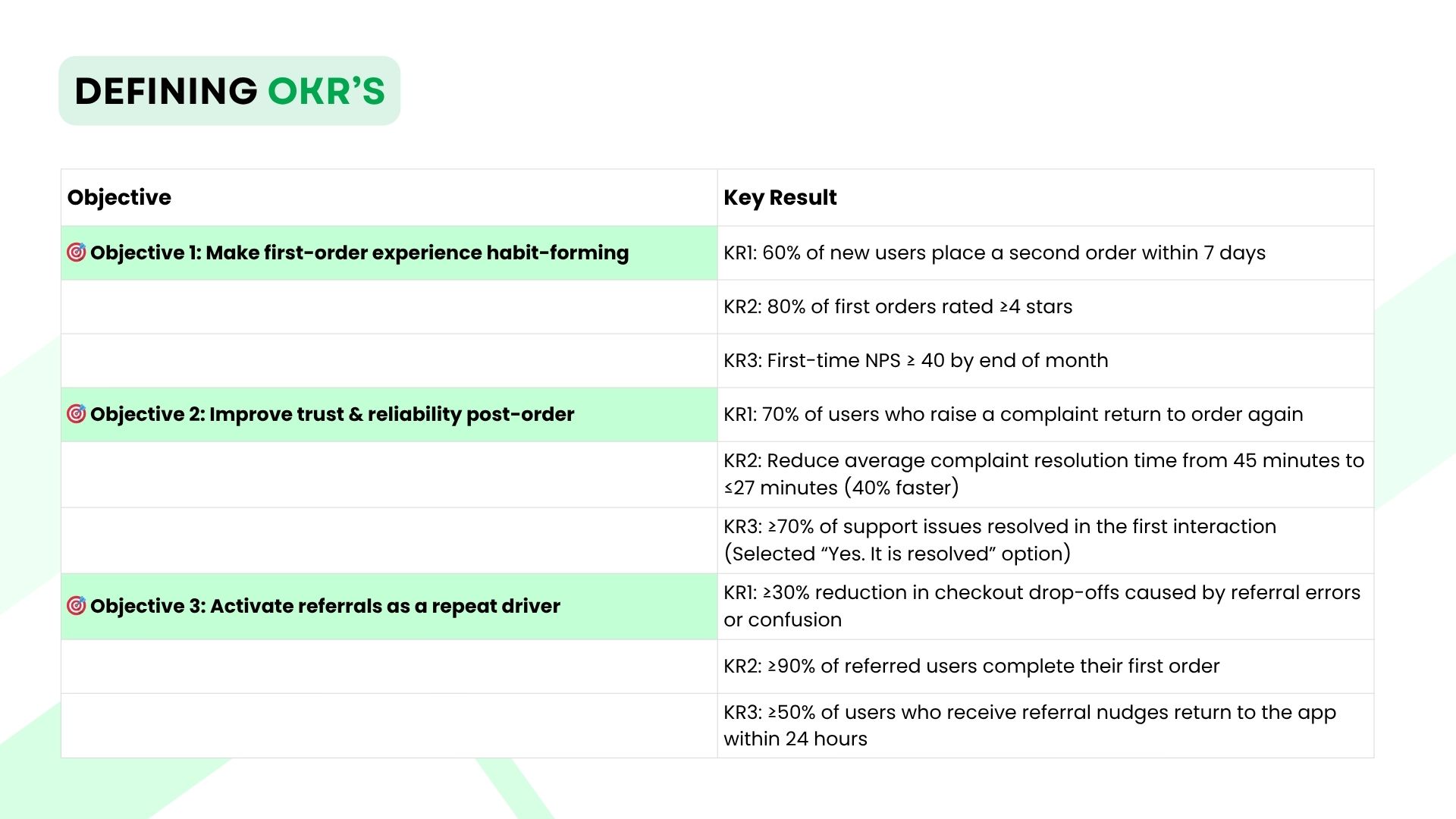
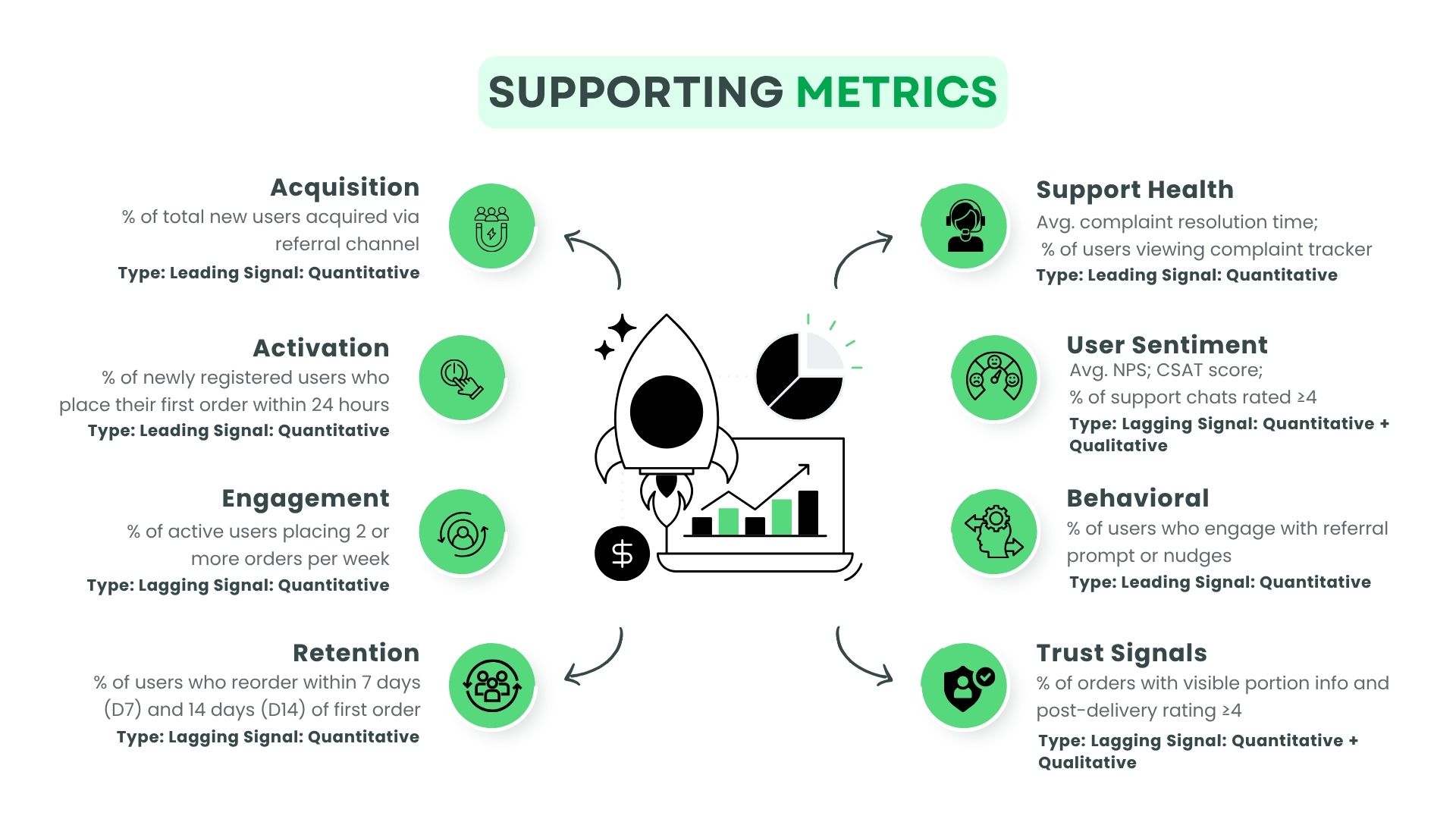
| Impact Metrics | Success measured by 7-day reorder rate, complaint resolution time, NPS, support satisfaction, and referral-driven reorders. |


 The ProductBrain